Creator Niche Selection: How to Choose a Niche Brands Actually Hire For
How to choose a creator niche that balances what you can sustain, what your audience wants and what brands pay for, with a scoring framework and real narrowing examples.
"Pick a niche" is the most common advice new creators get, and the least specific. The useful question isn't whether to niche down, but how far, and in which direction, so that you can keep making content, people keep watching it, and brands have a reason to pay for it.
Quick answer
Choose a niche where three things overlap: a topic you can make content about for years, an audience that actively looks for that content, and brands that sell to that audience and already work with creators. Start one or two levels narrower than the broad category (for example skincare rather than beauty, or budget smartphones rather than technology), add a language or regional angle if it's natural to you, and test with 20 to 30 posts before committing.
Broad vs narrow niches
| Broad niche (e.g. lifestyle, tech) | Narrow niche (e.g. budget smartphones) | |
|---|---|---|
| Audience | Large but loosely connected | Smaller but specific and engaged |
| Competition | Very high | Lower, easier to stand out |
| Brand fit | Many brands, weak fit | Fewer brands, strong fit |
| Growth | Harder to get recommended consistently | Easier to become the go-to creator |
| Risk | Hard to explain what you do | Can feel limiting; may run out of ideas if too narrow |
How to narrow: three examples
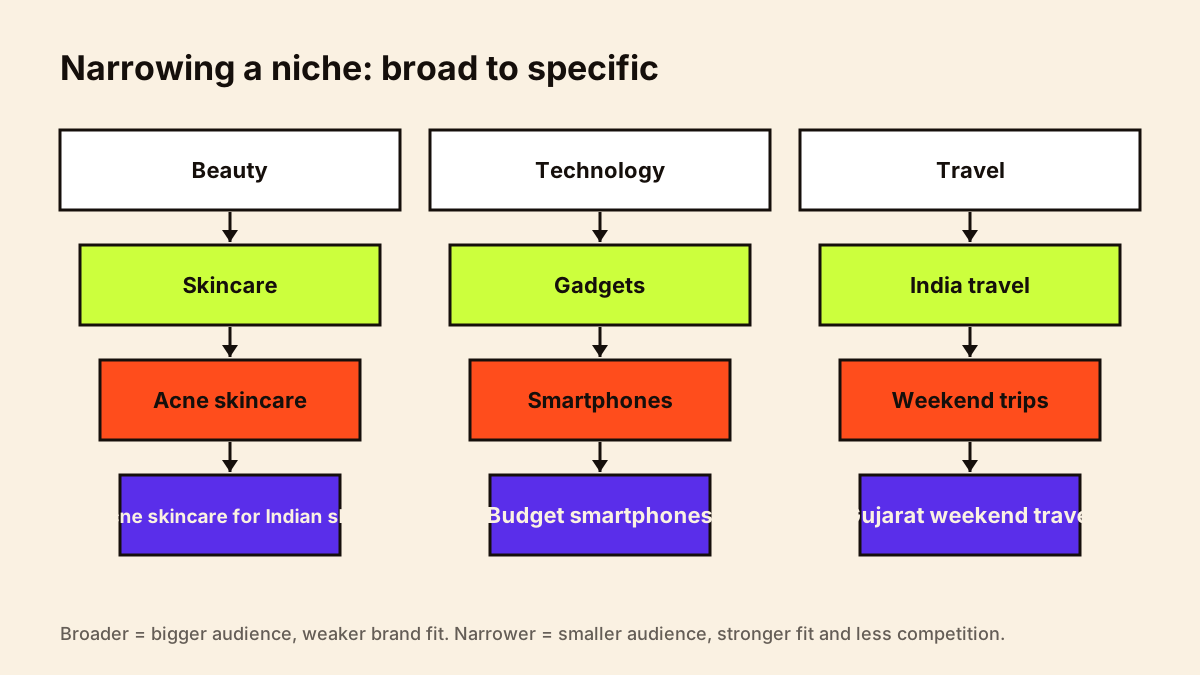
- Beauty → skincare → acne skincare → acne skincare for Indian skin and climate. Brand fit: dermatology-led D2C brands, sunscreen, pharmacy chains, skincare marketplaces.
- Technology → gadgets → smartphones → budget smartphones. Brand fit: phone brands' budget lines, accessories, e-commerce sale events.
- Travel → India travel → weekend trips → Gujarat weekend travel. Brand fit: homestays, regional tourism boards, car rentals, local restaurants, travel apps.
Notice that the last step often adds geography or language. That's frequently where Indian creators find the least competition and the most loyal audiences.
The niche scorecard
Score each niche you're considering from 1 (weak) to 5 (strong) on each factor. The total isn't a formula for success, but it makes trade-offs visible.
| Factor | Question to ask | Where to look |
|---|---|---|
| Sustainability | Can I make 150 posts on this without burning out? | Brainstorm 50 post ideas; if you struggle at 20, it's too narrow |
| Expertise or experience | Why should people listen to me on this? | Your job, study, hobbies, life experience |
| Audience demand | Are people actively searching and asking about this? | YouTube and Instagram search suggestions, comments on similar creators, Reddit and Quora questions |
| Brand demand | Do brands sell to this audience and pay creators? | Paid partnership labels and sponsored segments on similar creators |
| Monetization range | Beyond sponsorships, are there affiliate, product or service options? | Affiliate programmes, courses and products in the niche |
| Competition | Can I be distinctive here? | Top 20 creators in the niche; what's missing? |
| Language or regional angle | Is there an underserved language or region? | Search the topic in your language; count active creators |
Niche A: General fashion (English)
Sustainability 4 · Expertise 2 · Audience demand 5 · Brand demand 5 · Monetization 4 · Competition 1 · Language angle 1 = 22

Niche B: Office wear under ₹1,500 for women in Tier 2 cities (Hindi + English)
Sustainability 4 · Expertise 4 · Audience demand 4 · Brand demand 4 · Monetization 4 · Competition 4 · Language angle 4 = 28

Niche B scores higher mainly on competition and language, the two factors new creators most often ignore.
Checking brand demand before you commit
- Find 10 creators in the niche. Note every brand they've worked with in the last six months.
- Check whether those brands pay creators (paid partnership labels, sponsored segments, creator ads) or only gift products.
- Look for brands advertising to the audience even without creators; they're future prospects.
- Check affiliate availability for the products your audience would buy.
The how to find brands to collaborate with guide has a repeatable routine for this research.
Regional-language opportunities
Many Indian categories are crowded in English and thin in regional languages. A personal finance creator in Tamil, a skincare creator in Bengali or a tech reviewer in Marathi may face far fewer direct competitors, and brands expanding beyond metros actively look for them. Choose a language you're genuinely fluent and comfortable creating in; audiences notice when it isn't natural.
Sub-niches and series
You don't need one tiny niche forever. Many creators keep a focused core (for example budget smartphones) and add adjacent series over time (budget earbuds, phone photography tips). Expand when your core audience asks for it, not when you're bored.
Test before you commit
- Post 20 to 30 pieces in the niche over six to eight weeks.
- Track average views, saves, shares and follower growth per post, not just one viral hit.
- Read comments: are people asking follow-up questions and product questions?
- Notice whether you still enjoy making it.
- Adjust the angle (audience, price point, language, format) before abandoning the topic.
Choosing a niche is the first step; becoming known within it is creator positioning.
Common niche mistakes
- Choosing only by what pays the most, with no genuine interest.
- Going so narrow there are no brands or no audience.
- Switching niches every month before any content has a chance to find its audience.
- Copying a big creator's niche exactly instead of finding an angle.
- Ignoring disclosure and qualification expectations in regulated areas like finance and health.
Once you've chosen, turn it into a clear identity with how to build a creator brand, and when you're ready for your first partnership, follow how to get your first brand collaboration in India.
If your audience speaks an Indian language, your niche can be defined by language and region as well as topic; see regional creator growth in India.
To see how others already serve a niche, and where the gaps are, use creator competitor analysis.