How Do I Know Whether My Brand Is Ready for Influencer Marketing?
A readiness scorecard for brands considering influencer marketing: product proof, customer clarity, conversion and tracking, fulfilment, claims and compliance, budget, ownership and approvals, with what to fix first.
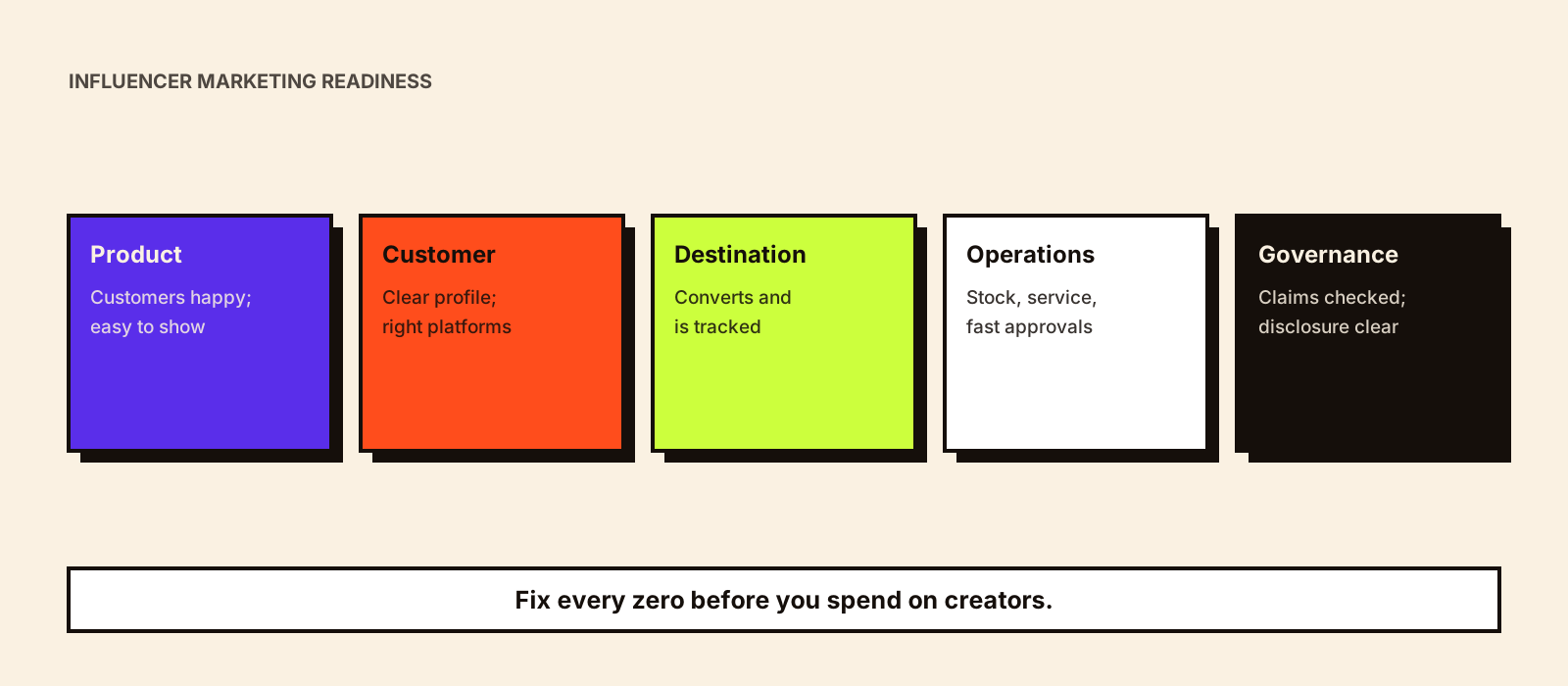
Creator campaigns tend to expose weaknesses that were already there: a product page that doesn't convert, a team that can't approve content in under a week, a claim nobody can substantiate, stock that runs out on day two. None of these are creator problems, but they decide whether creator spend turns into customers. A short readiness check before the first campaign is cheaper than learning these lessons mid-launch.
Quick answer
Your brand is ready for influencer marketing when the product reliably satisfies customers and can be shown on camera, you can describe the customer clearly enough to match creators' audiences, the place creators send people (site, app, marketplace or store) converts and is tracked, you can handle a spike in orders or enquiries, your product claims are substantiated and you know the disclosure rules, there's a budget for a test with several creators, and one person owns the work with an approval process that turns content around in days, not weeks. If two or more of these are missing, fix them first.
The readiness scorecard
Score each area 0 (not in place), 1 (partly) or 2 (in place). Be honest; the score is only for you.
| Area | Ready (2) looks like | Not yet (0) looks like | Fix first |
|---|---|---|---|
| Product proof | Good reviews, repeat purchases or referrals; returns under control | Few customers yet, or frequent complaints | Get the product right with existing customers before amplifying it |
| Customer clarity | A written profile: who buys, where they live, languages, what they watch | 'Everyone aged 18 to 45' | Interview recent buyers; check your own followers' insights |
| Platform fit | You know which platforms your buyers use for advice in your category | Platform chosen because competitors use it | Ask customers where they discovered you; check where category creators publish |
| Destination and conversion | Mobile page or listing that converts current traffic, fast checkout, clear offer | Slow site, confusing page, out-of-date marketplace listing | Fix the page before buying traffic |
| Tracking | Unique links and codes per creator, analytics tested, a plan for untracked sales | No analytics access, codes shared across creators | Set up and test links, codes and goals |
| Fulfilment and service | Stock, delivery and customer service can handle a spike | One person packing orders; replies take days | Plan stock and staffing for the campaign window |
| Claims and compliance | Every claim creators will make is substantiated; disclosure rules understood | Health, finance or performance claims nobody has checked | List approved claims; brief creators on disclosure |
| Budget and cash flow | A test budget for several creators, with creators paid on agreed dates | Enough for one creator, or payment terms you can't keep | Size a test you can fund properly, or wait |
| Ownership and approvals | One owner; named approvers who respond within two or three working days | Five reviewers, no deadlines | Name one decision-maker and set turnaround times |
| Content reuse | You know where you'd reuse creator content and will negotiate rights upfront | Planning to 'figure out rights later' | Decide channels and duration before contracting |
- 16 to 20: ready for a first campaign. Use the strategy and brief guides next.
- 10 to 15: ready for a small, tightly scoped test while you fix the weakest areas.
- Below 10, or a 0 in product proof, destination or claims: fix those before spending on creators.
The bands are a planning aid, not a validated model. A single 0 in a critical area can outweigh a high total.
Ready for which kind of influencer marketing?
| Activity | Minimum readiness | Can wait |
|---|---|---|
| Product seeding and gifting | Product proof, customer clarity, disclosure understood | Large budget, paid rights |
| A paid test with several creators | Everything above, plus tracking, a test budget and one owner | Multiple platforms, regional coverage |
| A product launch | All areas, especially fulfilment, approvals and a fixed timeline | Always-on structure |
| UGC for ads | A paid media account that already runs ads, rights planned upfront | Creators with large audiences |
| An always-on program | At least one measured campaign that worked, monthly budget, weekly ownership | Nothing; this comes last |
Moving from one-off campaigns to a continuous program has its own checklist in always-on influencer marketing.
Regulated categories need more preparation
If you sell health, nutrition, financial, insurance or similar products, readiness includes knowing what creators may say and who may say it. ASCI's influencer guidelines require influencers giving technical advice in banking, financial services and insurance, or in health and nutrition, to hold and disclose relevant qualifications, and every influencer post with a material connection must be clearly labelled. Category regulators can add their own rules on top. Influencer marketing compliance covers the details, and the guidelines themselves are on ASCI's influencer guidelines page.
Selling outside India adds rules of its own. The UAE requires creators to hold an advertiser permit, and regulators in Britain and Australia expect clear 'Ad' labelling. Before briefing creators there, read the GCC influencer marketing playbook, UK influencer advertising rules and Australian influencer advertising rules.
False signals of readiness
- A competitor is doing it. Their product, margins and audience may be different, and you can't see their results.
- A creator messaged you offering a post. That's an inbound sales pitch, not evidence of fit.
- There's budget left at the end of the quarter. Unplanned spend usually skips tracking and briefing.
- Your own social following is growing. Your followers already know you; creators are for reaching people who don't.
- Someone in the team knows a creator personally. Fit still has to be checked like any other creator.
If you're not ready: the next 30 days
- Talk to ten recent customers: why they bought, where they heard of you, who they follow.
- Fix the one page or listing creators would send people to, and test it on mobile.
- Set up tracking: analytics goals, link parameters and a way to issue unique codes.
- Write an approved-claims list with the evidence for each claim.
- Name an owner and agree who approves content and how fast.
- Price a test with real quotes from a handful of creators, then decide whether it's affordable.
When the scorecard looks healthy, is influencer marketing worth it for a small business or startup helps you check the economics, and how to build an influencer marketing strategy turns readiness into a plan.
Conclusion
Readiness isn't about size or budget. A small brand with a product customers love, a page that converts, clear claims and one decisive owner is more ready than a large one with none of those. Score yourself honestly, fix the zeros, and start with the kind of influencer marketing your score supports.