Influencer Rate Card: How to Create and Price Your Creator Rate Card in India
A rate card turns "what do you charge?" into a quick, professional answer. Here's how to structure one, which line items to include, and how to price add-ons like usage rights and exclusivity.
When a brand asks "what are your rates?", creators without a rate card tend to either undercharge on the spot or go quiet for two days. A rate card fixes both problems: it's a document you prepare once, price carefully, and update when your numbers change.
This guide is about building the document itself: its structure, line items and add-ons. For the reasoning behind the actual numbers, read how much creators should charge for brand collaborations alongside it.
Quick answer
An influencer rate card lists your base price for each content format you offer (for example an Instagram Reel, a Story set, a YouTube integration or a UGC-only video), then prices add-ons separately: paid usage rights, exclusivity, extra revisions, raw footage and cross-posting. There's no standard India rate. Build your prices from your average views, engagement, niche, production effort and the rights a brand wants, and quote bundles for multi-deliverable campaigns.
What is a rate card?
A rate card is a price list for your creator services. Unlike a media kit, which sells you, a rate card defines what each thing costs and what's included. Good rate cards make it obvious that a Reel posted on your account is a different product from a Reel the brand runs as an ad for six months.
Why creators need one
- Consistency: similar work gets similar prices, which protects your credibility when brands compare notes.
- Speed: you can answer rate questions the same day, which matters when brands are shortlisting.
- Unbundling: listing usage rights and exclusivity separately stops them being given away inside the base fee.
- Negotiation room: a clear structure lets you adjust scope instead of just cutting your price.
Base deliverables to list
List only the formats you actually make well. For each, define what's included so the price has a clear scope.
| Deliverable | What the base price should include | Notes |
|---|---|---|
| Instagram Reel | Concept, script, shoot, edit, caption, one posting on your account, one round of revisions, organic reposting by the brand with credit | Usually your core product; price from average Reel views |
| Instagram Story set | A set of 3 to 5 frames, link sticker if eligible, one posting | Stories expire in 24 hours unless highlighted; note if a highlight is included and for how long |
| Static post | One image, caption, posting | Fewer brands ask for single images now; keep if your audience engages with them |
| Carousel | Up to a stated number of slides, caption, posting | Good for education and product comparisons; state the slide count |
| YouTube integration | A segment of stated length (for example 60 to 90 seconds) inside a regular video, link in description, pinned comment if agreed | Price from average views per long-form video over a recent period |
| YouTube dedicated video | A full video about the brand or product | Higher production and audience-trust cost than an integration |
| YouTube Shorts | One Short, posting, link in related video or description as available | Price from Shorts views, which behave differently from long-form |
| UGC-only video | Video delivered to the brand for their channels or ads, not posted on your account | Priced for production; usage rights are usually the main variable |
If UGC is a big part of your work, the UGC creator portfolio guide covers how brands evaluate UGC-only creators, which is a slightly different sell to influencer work.
Add-ons to price separately
These are where most creators leave money on the table. Each one gives the brand extra value or restricts what you can do, so each should have its own line.
| Add-on | What it means | How to express it on your card |
|---|---|---|
| Paid usage rights | The brand runs your content as ads, from its own account | Priced by duration (e.g. 30, 90, 180 days) and media (Meta ads, YouTube ads, website) |
| Paid amplification / whitelisting | The brand runs ads from your handle, for example Instagram partnership ads | Separate line; state duration and whether you approve ad copy |
| Exclusivity | You agree not to work with competitors for a period | Priced by category breadth and duration |
| Extra revision rounds | Changes beyond the included round | Per-round fee, or "one round included, further rounds charged" |
| Raw footage | Unedited clips for the brand to re-edit | Separate fee; raw footage lets the brand make many new assets |
| Cross-posting | Same content posted to another platform (e.g. Reel to YouTube Shorts) | Percentage or flat add-on per extra platform |
| Rush delivery | Turnaround faster than your standard timeline | Flat fee or percentage uplift |
| Link in bio / highlight | Keeping a link or Story highlight live for a set period | Per week or per month |
We don't publish a fixed percentage for these add-ons because it varies too much between creators, categories and campaigns. What matters is that they're visible, so a brand asking for six months of paid usage understands it's buying more than a post. The creator usage rights, creator exclusivity, creator whitelisting and creator content licensing guides explain how to scope each one.
Bundles
Bundles combine formats at a price below the sum of the parts. They're useful because most campaigns want more than one touchpoint, and a bundle lets you offer value without cutting your per-format rate.
LAUNCH BUNDLE
• 1 Instagram Reel
• 1 Story set (3–5 frames) on launch day with link sticker
• 1 follow-up Story set within 7 days
• 30 days organic reposting rights for the brand
Price: [your Reel rate + Story rates] minus [a discount you're comfortable with]

ALWAYS-ON BUNDLE (3 months)
• 1 Reel per month
• 2 Story sets per month
• Category exclusivity for the 3 months (priced in)
Price: monthly fee, invoiced monthly
How to price: a framework, not a market rate
You'll see "standard" India rate tables online listing a price per follower tier. Treat them with caution. Pricing in India varies enormously by audience, niche, city mix, language, content quality and the rights involved, and two creators with the same follower count can reasonably charge very different amounts. Instead of copying a table, build your number step by step.
- Start from your audience value: your average views per format over a recent period, not followers.
- Adjust for engagement quality: saves, shares and meaningful comments signal attention brands will pay more for.
- Adjust for niche: finance, B2B, tech and some health categories typically command more than broad entertainment, because the audience is harder to reach.
- Adjust for geography and language: audience concentration in a brand's target cities or language is worth more to that brand.
- Add production cost: locations, props, extra talent, editing time, travel.
- Add rights and restrictions: usage rights, exclusivity, whitelisting.
- Sense-check against demand: if you're booked out, your price is probably low; if nobody replies after many good pitches, look at fit before cutting price.
It can help to look at how brands think about the same numbers. Brand-side guides to influencer marketing rates in India and how much brands should pay influencers show what planners weigh when they read your rate card.
A rate card template
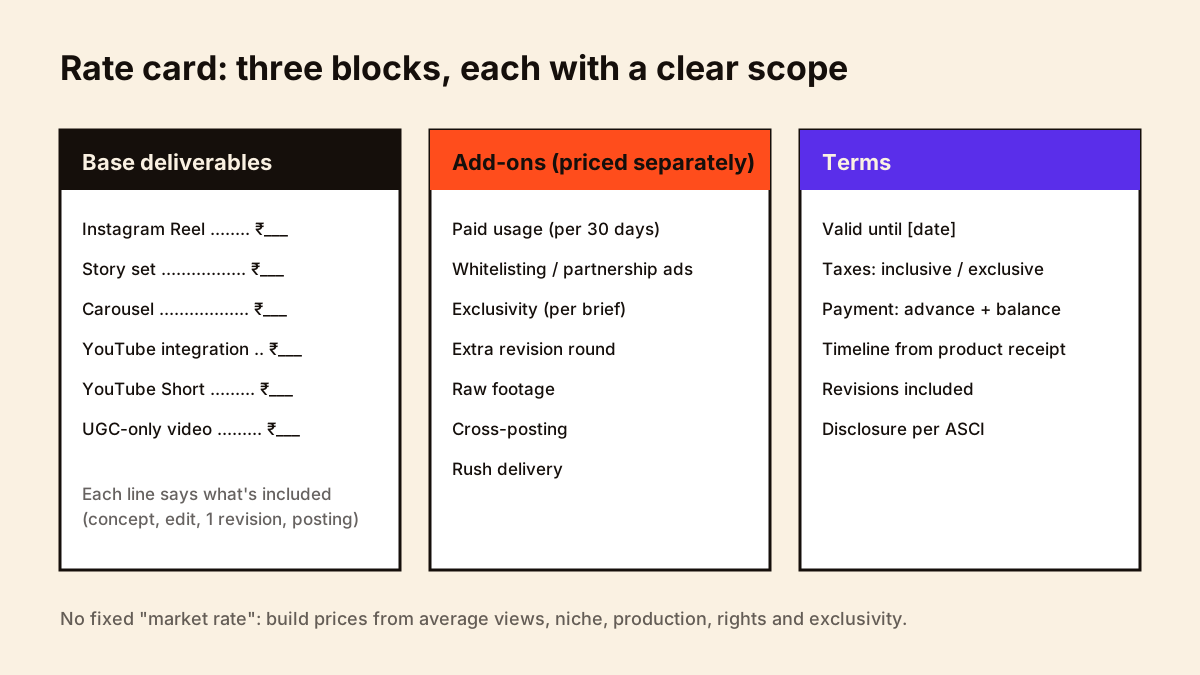
[YOUR NAME] — RATE CARD — valid until [date]
Rates in INR, exclusive of applicable taxes.

BASE DELIVERABLES
Instagram Reel ........................ ₹____
  Includes: concept, script, shoot, edit, 1 revision round, posting, 30 days organic reposting with credit
Instagram Story set (3–5 frames) ....... ₹____
Carousel (up to __ slides) ............. ₹____
YouTube integration (60–90 sec) ........ ₹____
YouTube dedicated video ................ ₹____
YouTube Short .......................... ₹____
UGC-only video (not posted by me) ...... ₹____

ADD-ONS
Paid usage (per 30 days, per platform) . ₹____
Whitelisting / partnership ads ......... ₹____ per 30 days
Category exclusivity ................... quoted per brief
Extra revision round ................... ₹____
Raw footage ............................ ₹____
Cross-posting to another platform ...... ₹____
Rush delivery (under __ days) .......... +__%

TERMS
Payment: __% advance, balance within __ days of posting
Timeline: draft within __ working days of receiving product/brief
Disclosure: all paid content labelled per ASCI guidelines and platform tools
Common mistakes
- One price for "a Reel" with no definition of what's included.
- Giving perpetual or paid usage rights inside the base fee.
- Pricing from follower count alone.
- Never updating the card as views and demand grow.
- No validity date, so a brand quotes a year-old rate back to you.
- Forgetting taxes: say whether prices include or exclude GST if you're registered.
Sharing your rate card
Share it after you've understood the brief, not before. Once you know the deliverables, platforms, timeline and usage the brand wants, send the relevant lines plus a quote for the specific campaign. That keeps the conversation about scope rather than a single number. When the brand pushes back, how to negotiate brand deals as a creator has example replies.
Before setting base prices, work out what each format costs you to make with creator content production cost, then turn your numbers into quotes with the creator pricing calculator.