Instagram vs YouTube vs TikTok: Which Platform Fits Your Creator Campaign?
How Instagram, YouTube and TikTok differ for creator campaigns: what each does best, where each is available across India, the Gulf, the UK, Australia and Singapore, and how to choose by audience, objective, format, budget and measurement.
Most brands pick a creator platform by habit: the one the marketing team uses, or the one a competitor seems to be on. A better starting point is where your customers actually spend attention, what the content needs to do, and whether you can measure the result. The three big video platforms do different jobs, and one of them isn't available in India at all.
Quick answer
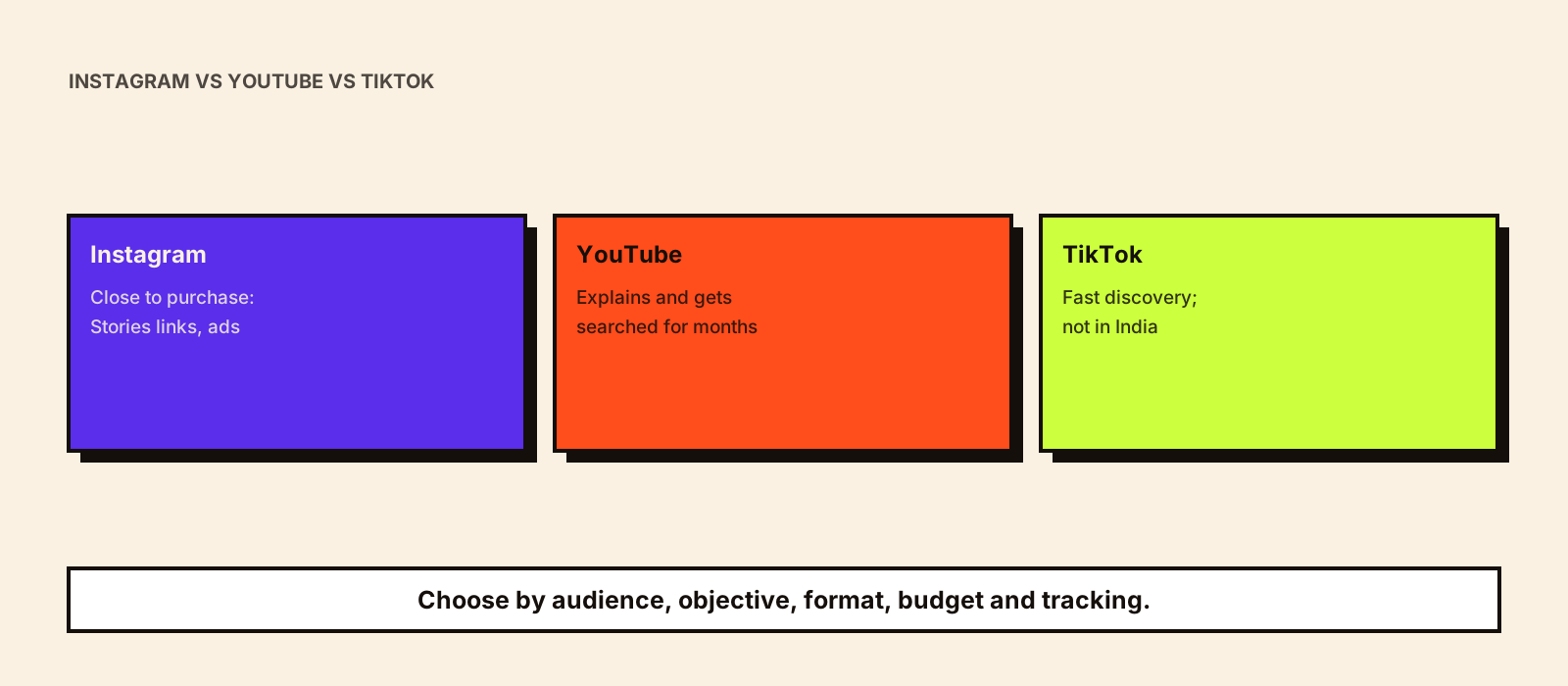
Choose Instagram when you need short, visual content that sits close to purchase, with Stories links and creator ads. Choose YouTube when the product needs explaining: reviews, demos and comparisons that people search for and watch for months. Choose TikTok for fast discovery and trend-led reach in markets where it's available, which excludes India. Then check five things before committing budget: where your audience is in each market, the objective, the format the product needs, how buyers will get from the content to a purchase, and whether you can measure it.
What each platform does best
| YouTube | TikTok | ||
|---|---|---|---|
| Core creator formats | Reels, Stories, carousels, Live | Long-form videos, Shorts, Live | Short videos, Live |
| How people find content | Followers plus recommendations | Search and recommendations | Mostly the recommendation feed |
| Shelf life of a post | Days for Reels, 24 hours for Stories | Long-form can keep getting views for months | Usually short, with occasional resurfacing |
| Path to purchase | Story link stickers, bio links, codes, product tags where available | Description links, pinned comments, codes, YouTube Shopping where available | Bio links, codes, TikTok Shop where available |
| Running creator content as ads | Partnership ads with the creator's permission | Ads from creator videos with permission | Spark Ads with the creator's authorisation |
| Best for | Lifestyle, beauty, fashion, food, D2C launches | Considered purchases: tech, finance, education, auto, B2B | Discovery, trends, younger audiences, entertainment-led products |
These are tendencies, not rules. A finance brand can do well with Instagram explainers, and a beauty brand with long YouTube reviews. Platform guides go deeper: Instagram influencer marketing, YouTube influencer marketing and YouTube Shorts vs long-form.
Availability by market
| Market | YouTube | TikTok | Also consider | |
|---|---|---|---|---|
| India | Available | Available | Not available (blocked since 2020) | Regional short-video apps, LinkedIn for B2B |
| UAE | Available | Available | Available | Snapchat; creator advertiser permits apply |
| Saudi Arabia | Available | Available | Available | Snapchat; Mawthooq licences apply |
| United Kingdom | Available | Available | Available | Podcasts, LinkedIn for B2B |
| Australia | Available | Available | Available | Under-16 social media age rules affect youth campaigns |
| Singapore | Available | Available | Available | Multilingual audiences; sector rules for finance and healthcare |
India's TikTok status is confirmed in the government's own statement that no order has been issued to lift the ban. YouTube's Creator Partnerships tools for finding creators are available in all six of these markets. Commerce features such as TikTok Shop and YouTube Shopping vary by country and change often, so check the current help pages for each market before planning shoppable content.
Choose by objective
| Objective | Usually leads | Why |
|---|---|---|
| Awareness in a new audience | TikTok or Instagram Reels (YouTube Shorts in India) | Recommendation feeds show creators to non-followers |
| Consideration for a complex product | YouTube long-form | Time to explain, compare and answer objections; searchable for months |
| Direct sales of a visual product | Stories links, codes and creator ads close to purchase | |
| Launch-day spike | Instagram plus TikTok or Shorts | Many creators posting in a short window |
| Content for your own ads | Whichever platform you advertise on most | Rights and ad permissions are platform-specific |
| B2B leads | LinkedIn, then YouTube | Professional context; longer explanations |
Choose by budget
Budget changes the answer more than most brands expect. Long-form YouTube integrations usually cost more per creator because they take more scripting, filming and editing, so a small budget buys fewer of them. Short-form platforms let the same budget spread across more creators, which is better for testing and reach. Paid amplification of creator content needs its own line.
- Small test budget: one platform, several creators, one objective. Spreading a small budget across three platforms leaves too little on each to learn anything.
- Mid budget: a lead platform for the objective plus a second for reach or content reuse, with tracking set up on both.
- Larger budget: give each platform a job, and keep a share for paid amplification of the best creator content.
Fees vary too much by creator, niche and market for a reliable rate card; price from quotes for your exact scope. How much to pay influencers and the market cost guides explain the drivers, and influencer marketing budget covers splitting spend.
Check the path to purchase and measurement
- Where will buyers click? Instagram feed captions and Reels captions don't carry clickable links; Stories and bios do. YouTube descriptions do.
- Where will they buy? Your site, a marketplace, an in-app shop, a store or WhatsApp. Plan codes and links for each.
- What can you see? Ask creators for native insights on a fixed day; platform metric definitions differ (YouTube counted views differently from 24 August 2026).
- Can you run the content as ads? Each platform has its own permission flow; agree it in the contract.
Influencer UTM tracking and how to track influencer sales cover the setup, and reach vs impressions vs views explains the metric differences.
Beyond the big three
- LinkedIn: B2B and professional audiences; see LinkedIn influencer marketing.
- Snapchat: important for younger audiences in Saudi Arabia and the UAE; see Instagram vs TikTok vs Snapchat in the UAE.
- Podcasts: trust built over long listening; see podcast influencer marketing.
- Pinterest: planning and inspiration searches; see Pinterest creator marketing.
Guides: LinkedIn influencer marketing, Instagram vs TikTok vs Snapchat in the UAE, podcast influencer marketing and Pinterest creator marketing. Market-specific platform comparisons are in the best platforms in India and Instagram, TikTok and YouTube in Australia.
Hypothetical example
Hypothetical. A skincare brand selling in India and the UAE wants first orders and content for its ads. In India it leads with Instagram (Reels for reach, Stories links for orders) and adds two YouTube reviews for people researching ingredients. In the UAE it uses Instagram and TikTok, checks every creator's advertiser permit, and secures partnership ad and Spark Ads permissions so the best videos can run as ads. Each platform gets its own codes and links, and results are reported per market and platform before any budget is moved.
Common mistakes
- Planning TikTok for an India campaign.
- Choosing the platform before the objective.
- Spreading a small budget across every platform.
- Comparing views across platforms as if they were counted the same way.
- Forgetting that ad permissions are platform-specific.
Conclusion
Instagram, YouTube and TikTok aren't interchangeable. Start from the audience in each market, the objective and the format the product needs, then check the path to purchase, the budget and whether you can measure the result. For more than one platform at once, see multi-platform influencer campaigns.