Social Media Management for Fashion Brands: From Product Drops to Everyday Brand Storytelling
How fashion and clothing brands can run their own social accounts between and around drops: launches, styling, honest fit content, lookbooks, creators, UGC, seasonal moments and community care, with a sample launch sequence.
The new collection went live on Friday with a carousel, three Reels and a countdown Sticker. By the following Wednesday the feed had gone quiet, and the most active part of the account was the comments section, full of people asking whether the kurta runs small. Fashion brands often plan social media around drops and then struggle with everything that happens between them.
Quick answer
Social media management for fashion brands means running two rhythms together: planned launch sequences for each collection, and everyday storytelling that keeps the feed useful between drops. Build content around styling, honest fit and fabric details, lookbooks, behind the scenes, creators and customer UGC, and tie seasonal content to festive, wedding and sale periods. Answer size questions quickly and send returns and order issues to support.
Two rhythms: drops and everyday storytelling
A fashion calendar has peaks. Collection launches, festive edits and sales create bursts of content and attention. The weeks between are just as important, because that's when people decide whether your brand is one they want to keep following. If the account only speaks when there's something to sell, followers learn to ignore it.
Plan the year as a set of launch sequences, then fill the gaps with recurring formats your team can produce without a shoot every time: styling ideas from existing stock, fit notes, fabric close-ups, customer reposts and studio moments. That way the account always has something honest to say.
Content formats that work for fashion
| Format | What it does | Practical note |
|---|---|---|
| Collection reveals | Introduces the story, palette and key pieces | Plan as a sequence, not one post |
| Styling content | Shows one piece worn three ways, or how to pair it | Can reuse existing stock; no new shoot needed |
| Fit and fabric demonstrations | Shows drape, stretch, lining, transparency and movement | Use the size chart; say who the model is and what size they wear |
| Lookbooks | Sets the mood of a collection in a few strong images | Pair with practical posts so mood doesn't replace information |
| Behind the scenes | Sampling, printing, embroidery, packing, studio days | Only show artisans or staff with their consent |
| Creator collaborations | Shows the range on different bodies and styles | Disclosure and usage rights agreed upfront |
| Customer UGC | Real customers wearing the pieces | Repost with permission and credit |
| Seasonal edits | Festive, wedding, travel or monsoon edits | Plan stock and content together |
Fit, fabric and sizing honesty
Fit is the question that comes up most often in fashion comments and DMs, and the one that drives returns. Content that answers it honestly is worth more than another mood shot. Show garments in motion, in daylight, from the back and side as well as the front. Name the model's height and the size they're wearing. Show the fabric up close so people can judge weight and texture.
Where a style runs small or large, say so in the caption and on the product page. It can feel like admitting a flaw, but it saves the customer a return and saves your team the comment thread. Avoid editing that changes how a garment looks, such as digitally slimming a fit or shifting the colour of a fabric, because the customer will see the difference when the parcel arrives.
Collection launch: an example content sequence
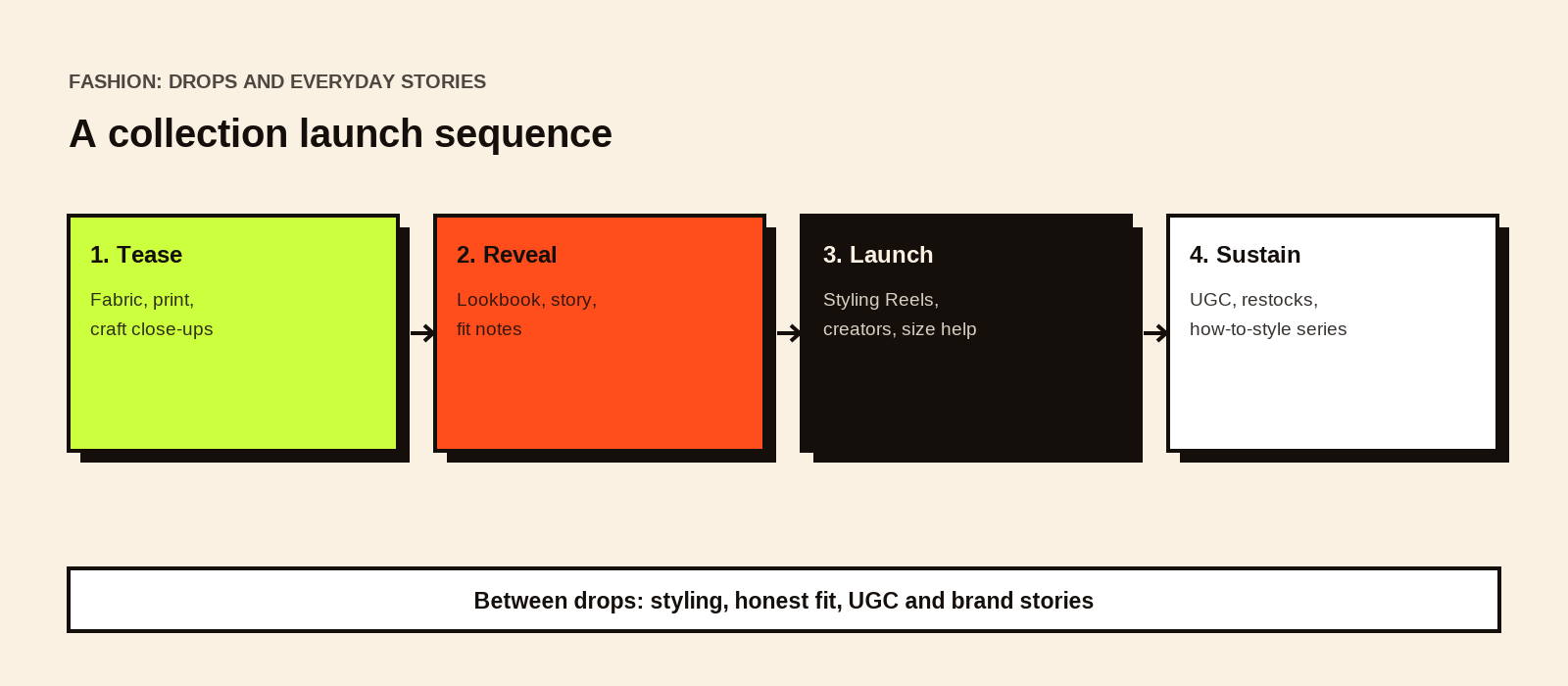
Here is a hypothetical example for an imagined label, 'Label Neel', launching a twelve-piece festive collection of block-printed kurtas and co-ord sets. It shows how a launch can run as phases rather than one announcement. Adjust the timings to your production and stock.
| Phase | Timing (example) | Content | Goal |
|---|---|---|---|
| Tease | 10 to 14 days before | Fabric and print close-ups, a block-printing process Reel, a colour palette carousel, a 'guess the motif' Story | Build curiosity and show craft before price |
| Reveal | 3 to 5 days before | Lookbook images, a collection story post, piece-by-piece carousel, fit notes for key styles | Introduce the pieces and answer early questions |
| Launch | Launch day to day 3 | Launch Reel, styling Reels, creator posts, Stories with links and size help, a pinned post | Drive visits and make buying easy |
| Sustain | Week 2 to week 6 | Customer reposts, 'how to style' series, restock news, fit FAQs, wedding and festive styling | Keep the collection visible after the first spike |
The sustain phase is where most brands stop too early. A collection usually has a longer life than its launch week, and sustain content can be cheaper to produce because it reuses lookbook assets, creator content and customer photos. If you want help planning the full launch, including creators, our product launch campaigns service covers it, and instagram product launch campaigns has more on the creator side.
Creators and customer UGC
Creators show your clothes on bodies, styles and budgets your own shoots won't cover. For your brand account, the useful questions are practical: can you reshare their content, for how long, and on which channels? Agree this in writing before the post goes live, and make sure creators label paid or gifted posts. How to choose and brief fashion creators is covered in influencer marketing for fashion brands in India, and finding the right ones is the job of creator discovery.
Customer UGC is often the best fit content you'll get, because real customers wear your clothes in real light. Ask before reposting, credit the customer, and keep a record of the permission. If you plan to use it in ads or on your website, get specific consent for that too; UGC content usage rights explains the difference.
Seasonal campaigns and brand storytelling
In India, fashion demand clusters around festive periods, the wedding season and end-of-season sales, and these differ by region and community. Map the moments relevant to your customers at the start of the year, then plan content lead times backwards from them: festive edits need shoots and stock earlier than the festival itself. Keep sale communication honest, with clear dates, which pieces are included and what the actual discount is.
Brand storytelling fills the rest of the calendar: why the label exists, where fabrics come from, who makes the pieces, how a print was developed. Keep stories specific and true. If a piece is handmade or uses a particular craft, be ready to explain how, because customers will ask. Visual platforms such as Pinterest can also suit styling and seasonal content; see Pinterest marketing for business if that's part of your plan.
Community management: sizes, returns and orders
Fashion comment sections fill up with size questions, 'is this available in my size?', delivery delays and return requests. Your social team can answer size and styling questions using the size chart and fit notes. Order problems, refunds, exchanges and delivery complaints belong to customer support: acknowledge publicly, then move the person to the support channel with a clear handover. Community management vs customer support explains where to draw that line.
- Size chart and fit notes for every live style, shared with whoever replies to comments.
- Saved replies for common questions, adapted rather than pasted.
- A named support contact and channel for order and return issues.
- Stock status updates during launches, so the team doesn't promise sizes that have sold out.
- A weekly list of recurring questions, fed into next month's content.
Common mistakes
- Posting heavily during launches, then going quiet until the next drop.
- Using only mood imagery, with no fit, fabric or size information.
- Retouching garments so they look different from what arrives.
- Reposting customer or creator photos without permission.
- Promoting a sale before support and stock are ready for the volume.
- Handling returns and refunds in public comment threads.
Practical recommendations
- Plan each collection as tease, reveal, launch and sustain, with the sustain phase lasting several weeks.
- Build three or four recurring everyday formats, such as 'one piece, three ways' and fit notes.
- Brief every shoot to capture fit and fabric content, not only campaign images.
- Map festive, wedding and sale moments for your customers at the start of the year.
- Agree reshare and usage rights with creators before they post.
If you want a team to plan and run this month to month, you can see what our social media management service includes, from calendars and design to Reels editing and community management.
Where to start
Map your next collection as a four-phase sequence, then list the everyday formats you can sustain between drops. Make fit and fabric honesty part of every shoot brief, and give your community team the size information and support handover they need. Drops create the attention; everyday content is what keeps people coming back.