How to Audit an Influencer Marketing Program Before You Scale It
Before doubling an influencer budget, check that the results are real and the program can carry more weight. A seven-part audit covering objectives and results, measurement, creators, content and rights, contracts and payments, compliance, and operations, with a scoring sheet.
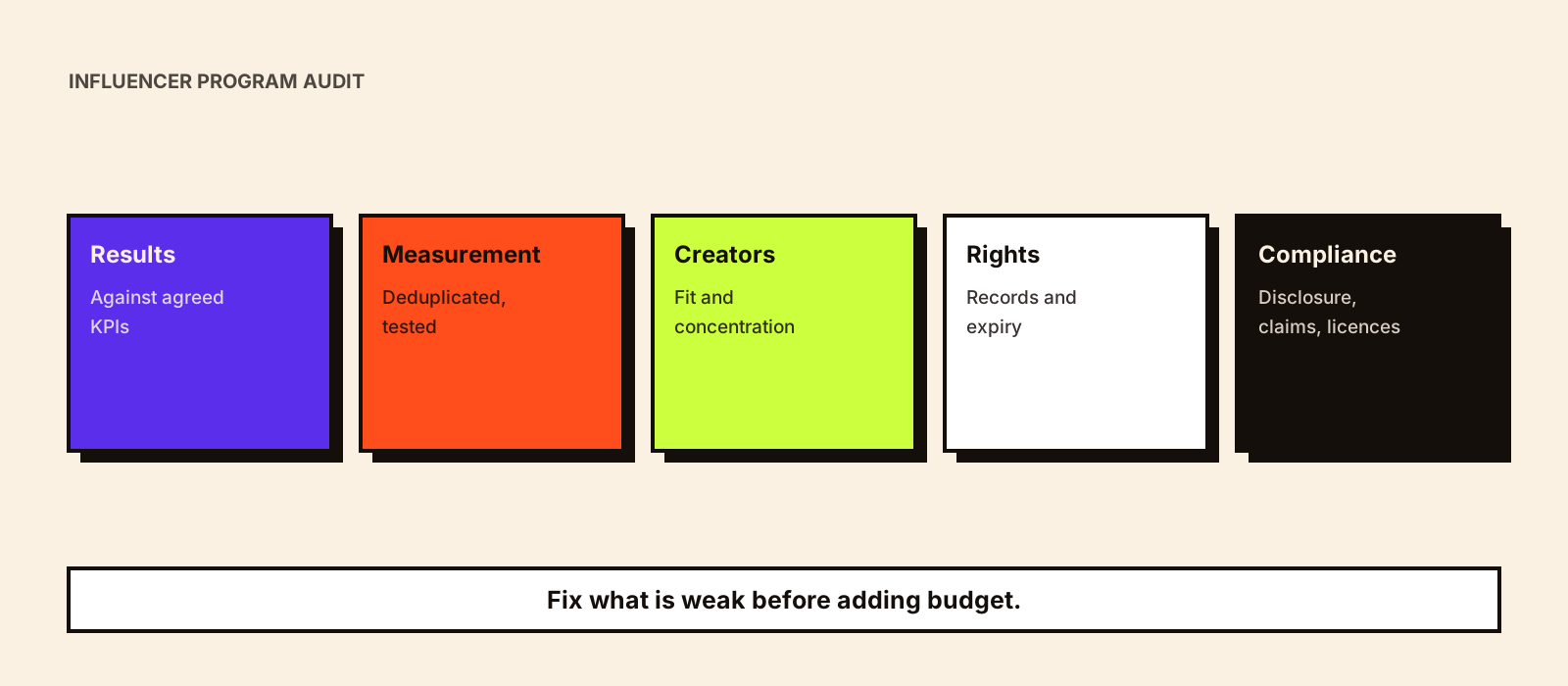
A program that worked at a small budget can break when it grows. Tracking that was 'good enough' starts double counting, a few creators carry most of the results, rights paperwork falls behind, disclosure slips, and the team that coped with ten creators drowns at forty. An audit before scaling finds these problems while they're still cheap to fix.
Quick answer
Audit an influencer program in seven areas: whether results are real and measured consistently, how reliable tracking is, how dependent results are on a few creators, whether content and rights records are complete, whether contracts and payments are in order, whether disclosure and claims comply in every market, and whether operations can handle more volume. Score each area, fix anything rated weak before adding budget, and scale in steps with a comparison group.
When to run an audit
- Before a significant budget increase, a new market or a new platform.
- When results look much better or worse than other channels and nobody can say why.
- When responsibility moves: a new marketing lead, a new agency or bringing work in-house.
- Once a year for an always-on program, even when nothing seems wrong.
The seven areas
| Area | What to check | Warning signs |
|---|---|---|
| 1. Objectives and results | Each campaign had a primary KPI and threshold set before launch; results compared with it | Success defined after the fact; reports full of reach with no business result |
| 2. Measurement | One naming convention for links and codes; orders deduplicated; delivered, net orders; a test or holdout for the channel | Code, link and survey sales added together; no comparison group; placed orders counted |
| 3. Creators | Share of results from the top few creators; audience location and quality checked; rebooking based on evidence | Two creators drive most results; creators booked on follower count |
| 4. Content and rights | Every reused asset has a rights record with channels, territory and expiry | Ads running on expired licences; nobody can find raw footage |
| 5. Contracts and payments | Signed agreements for every creator; payments on time; tax details collected | Work started on email agreements; late creator payments |
| 6. Compliance | Disclosure on every paid or gifted post; approved claims; licences where required (UAE permit, Saudi Mawthooq) | Missing labels; creators making claims the brand can't support |
| 7. Operations | Brief, approval and payment times; who owns what; capacity for more creators | Approvals take weeks; one person holds everything in their head |
Related guides: how to track influencer sales, influencer usage rights, influencer disclosure rules by platform and country, and influencer marketing operations.
How to run it
- Pull the last six to twelve months of campaigns: briefs, contracts, the creator list, posts, reports, rights records and payment dates.
- Sample rather than read everything: for example, ten creators and twenty posts chosen at random, plus the five biggest-spend creators.
- Check each sampled item against the checklist and note evidence, not impressions.
- Interview the people who run the program, including the agency if there is one, and a few creators.
- Score each area and agree fixes with owners and dates.
A scoring sheet
Area | Score (strong / adequate / weak) | Evidence | Fix | Owner | Date
1. Objectives and results |
2. Measurement |
3. Creators |
4. Content and rights |
5. Contracts and payments |
6. Compliance |
7. Operations |

Rule: any area scored weak is fixed before budget increases; compliance weaknesses are fixed immediately.
Hypothetical example
Hypothetical. A D2C brand plans to triple creator spend after a strong quarter. The audit finds that results are reported from code and link reports added together (inflating orders), that three creators delivered most of the orders, and that six ads use creator content whose paid licences have expired. Compliance and operations score adequately. The brand pauses the six ads, renews or replaces the licences, deduplicates past results (which turn out lower but still above break-even), recruits more creators similar to the top three, and scales in two steps with a regional comparison group.
After the audit
An audit tells you whether the program is ready; the scaling decision itself is covered in how to decide whether to scale, pause or stop an influencer campaign. Standing policies and approvals are in influencer marketing governance, and risk triggers in influencer campaign risk management.
Common mistakes
- Auditing only the results, not how they were measured.
- Reading reports instead of checking source records.
- Treating compliance gaps as minor because results are good.
- Scaling in one jump after the audit, with no comparison group.
Conclusion
Scaling multiplies whatever is already in a program, including its weaknesses. Audit results, measurement, creators, rights, contracts, compliance and operations against evidence, fix what's weak, and then scale in steps.