Real Estate Social Media Marketing: What Property Brands Should Post at Every Stage of the Buyer Journey
A buyer-journey content matrix for developers, brokers and channel partners: what to post for awareness, research, site-visit consideration and decision, which formats fit, and how to track enquiry quality.
A couple in Pune has been scrolling property Reels for three months. They've saved a few, followed two developers and one broker, and still haven't sent an enquiry. What they need now isn't another drone shot of a tower at sunset. It's a clear explanation of what 'carpet area' means, a real drive from the site to their office, and someone who answers when they finally message. Most property feeds keep posting for the first moment and ignore the rest of the journey.
Quick answer
Real estate social media marketing works best when you plan content by buyer stage. In awareness, show the project, the area and the lifestyle honestly. In research, educate: buying basics, area comparisons and FAQs. Before a site visit, reduce friction with walkthroughs and visit logistics. At decision, answer objections and explain the process. Track enquiries with UTM-tagged links and CRM source tags, and never promise returns, appreciation or possession dates.
Who this matrix is for
The approach works for any property brand: a developer marketing its own projects, a brokerage covering several, or a channel partner promoting a developer's inventory. The stages are the same; what changes is how much you can say about a project and who signs it off.
Disclosure rules apply to everyone promoting registered projects, not only developers. In Maharashtra, for example, MahaRERA's Order No. 46C/2025 is addressed to both promoters and registered real estate agents. We cover RERA registration numbers, QR codes and approvals in detail in our guide to social media management for real estate developers, so this article doesn't repeat them. Apply that checklist to every project post below.
The buyer-journey content matrix
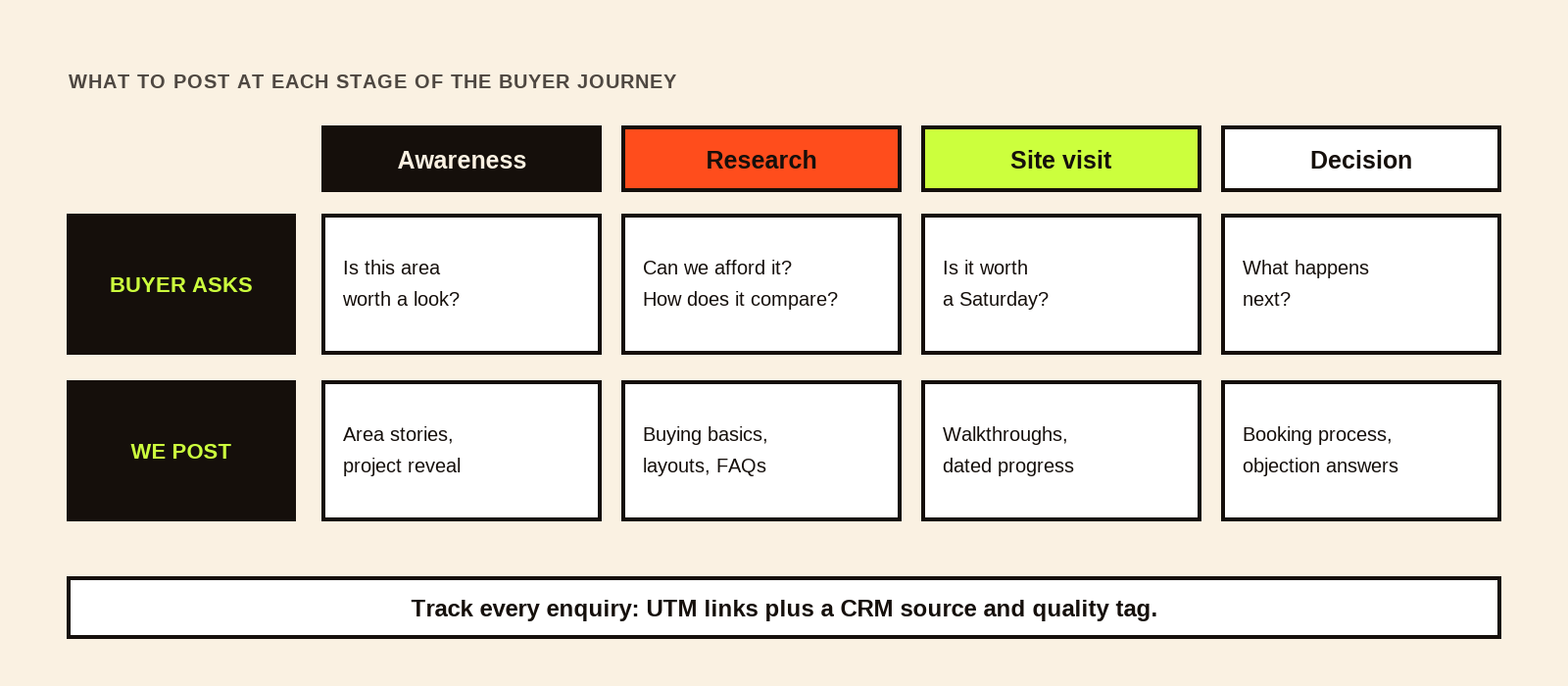
Use this as a planning grid. Each month, check that every stage has content in the calendar. A feed that is all awareness gets views but few serious enquiries; a feed that is all decision content feels like a sales brochure.
| Stage | Buyer's question | Content that answers it | Best formats | Next step offered |
|---|---|---|---|---|
| Awareness | Is this area or project worth a look? | Neighbourhood stories, project reveal, lifestyle in the area, developer track record | Reels, static posts | Follow, save, visit profile |
| Research | Can we afford it, and how does it compare? | Buying basics, area explainers, layout carousels, FAQ series | Carousels, YouTube explainers | Download floor plans, ask a question |
| Site-visit consideration | Is it worth a Saturday to go and see it? | Video walkthroughs, sample flat tour, route and visit logistics, construction progress | Long walkthroughs, Stories | Book a site visit |
| Decision | Is this the right choice, and what happens next? | Objection answers, booking process explainer, documents checklist, existing buyer community updates | Carousels, short Q&A videos, Stories | Talk to a named sales contact |
Awareness: earn the first look
At this stage, people aren't shopping for a project; they're forming a view of an area or a developer. Content that helps them picture daily life works better than spec lists. Ideas that suit this stage:
- A 'Saturday morning in this neighbourhood' Reel: the market, the park, the commute
- A project reveal that explains the design idea, not just the amenities list
- Completed projects revisited, with residents' consent, to show what you deliver
- Local history or landmark stories that give the area a personality
Local area storytelling is where property brands can stand apart, because nobody else will film the walk from the gate to the nearest bus stop. Keep it accurate: real distances, real travel times at real hours, and any proposed road or metro shown with its official status rather than as a selling point.
Research: become the most useful account they follow
This is the longest stage, and the one most feeds ignore. Buyers are comparing projects, working out budgets and learning vocabulary. Educational content earns saves and shares here, and it builds trust that pays off later.
Home-loan basics, framed generally
Many buyers need a loan, and they have basic questions: what a down payment covers, what a sanction letter is, how EMIs relate to tenure, which documents banks usually ask for. Explain these terms in general language, without quoting interest rates, eligibility figures or lender comparisons, and tell viewers to confirm details with their lender or a qualified adviser. Rates and terms change and vary by person; a post that quotes them goes stale or misleads.
FAQs and objections
Collect the questions your sales team hears every week and answer them one by one: carpet area vs built-up area, what maintenance charges cover, how parking is allotted, what 'under construction' means for the buyer. Our guide to turning customer questions into social media content shows how to turn these into a recurring series.
Site-visit consideration: make the visit feel worth it
A site visit costs the buyer half a day. Content at this stage should answer 'what will I see, and is it worth going?' Post full walkthroughs on YouTube, shorter cuts on Instagram, and practical details: visiting hours, directions, parking, how long a visit takes and who they'll meet. Show the actual site and dated construction progress alongside the sample flat, and label the sample flat and any renders clearly.
Decision: answer the last doubts
Close to booking, buyers want reassurance and clarity. Explain the booking process step by step, list the documents they'll typically need, and introduce the people they'll deal with after booking. Updates for existing buyers, such as progress posts and community events, are decision content too, because prospects watch how you treat people who have already paid. Leave prices, offers and payment plans to the sales conversation, where they can be specific and current.
Choosing formats by stage
| Format | Strongest at | Watch out for |
|---|---|---|
| Reels and Shorts | Awareness: area life, project reveal, quick myth-busters | Renders passed off as real footage; missing disclosures on the cover frame |
| Carousels | Research and decision: explainers, layouts, process steps | Too much text per slide; outdated figures |
| Long walkthroughs | Site-visit consideration | Undated footage; sample flat not labelled |
| Static posts | Announcements, milestones, event dates | Disclosure text too small to read |
| Stories | Visit-day logistics, quick polls, Q&A | Questions left unanswered after the Story expires |
For carousel structure, see our guide to planning Instagram carousels. If creators are part of the plan, influencer marketing for real estate brands covers working with local property creators alongside your own content.
Tracking lead quality, not just lead count
Property brands often judge social by the number of enquiries, then complain that the leads are poor. Track quality from the start. Tag every link in your bio, Stories and posts with UTM parameters; Google Analytics' help recommends always using utm_source, utm_medium and utm_campaign. Then record the source in your CRM for every enquiry, including those that arrive by WhatsApp or phone, and add tags your sales team can fill in after the first call.
- Source and campaign (from the UTM or asked on the first call)
- Project and configuration enquired about
- Budget range and timeline, as stated by the buyer
- Site visit booked, completed or not
- Sales team's quality rating after the first conversation
Expect gaps. Buyers forward posts on WhatsApp, see you on three platforms before calling, and often don't remember where they found you. Treat source data as directional, compare stages month to month rather than chasing a single cost-per-lead number, and look at which content themes appear in the history of buyers who actually visit. Our guide to UTM tracking explains the tagging itself in more detail.
Common mistakes
- A feed that is ninety per cent awareness content and offers no help to serious buyers
- Promising appreciation, rental yields or 'investment returns'
- Quoting interest rates or loan eligibility in captions
- Using renders as if they were photographs
- Asking for enquiries without a named person ready to respond
- Judging success by lead count alone, without a quality tag
- Channel partners reusing a developer's creatives without the correct disclosures for their own registration
Where to start
Take last month's posts and sort them into the four stages. Most property brands find the research and decision columns nearly empty. Fill those first with one FAQ series and one walkthrough, set up UTM and CRM tags, and review which stage the enquiries that turn into site visits came through.
Teams that want help planning a stage-based calendar can look at what an agency like Kudozz includes in social media management: strategy, content planning, creative and reporting, with disclosures and sales claims approved by your own team.