Social Media Marketing for Pet Clinics and Veterinary Practices: Building Trust With Pet Owners
How pet clinics and veterinary practices in India can use social media to build trust: what owners need from your feed, the Veterinary Council of India's code on advertising, responsible animal imagery, owner consent, emergency information, grief and a monthly content calendar.
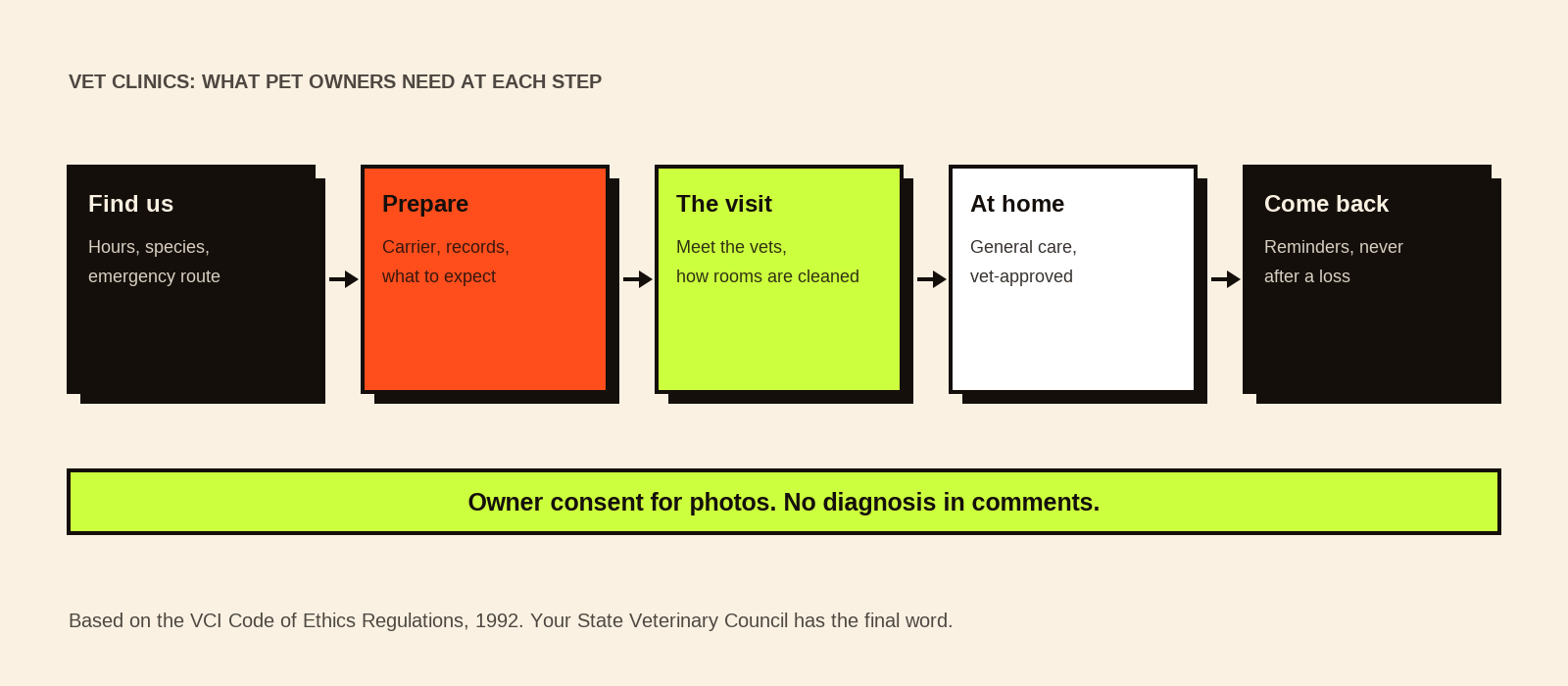
It is 11 pm on a Sunday and a dog owner is typing into your clinic's Instagram DMs: her Labrador ate something in the park and is vomiting. Is the clinic open? Should she come in or wait? The receptionist who manages the account sees it at 9 am. Whatever else your feed does, it has to make that moment easier: clear hours, a clear emergency route and a reply that never tries to diagnose from a message.
Quick answer
Veterinary clinics in India build trust on social media by being clear and useful: timings, emergency arrangements, what happens at a visit, who the vets are and general preventive care information approved by a vet. The Veterinary Council of India's 1992 code treats soliciting clients through self-promoting advertising, and publishing cases or letters of thanks in lay media, as unethical. Use pet photos only with the owner's consent, and never diagnose in comments.
What pet owners need from your feed
| Owner's question | Content that answers it | Format |
|---|---|---|
| Are you open, and what about emergencies? | Hours, holiday closures, emergency arrangements and the nearest 24-hour option if you are not one | Pinned post, highlight, Story updates |
| Which animals do you see? | Species and services you actually offer, by vet | Pinned carousel |
| What happens at the first visit? | Arrival, records, weight check, examination, discussing options, payment | Carousel |
| How do I prepare my pet? | Carriers, leashes, fasting only if the vet instructs, bringing previous records | Story highlight |
| Who are the vets? | Name, qualifications, registration details, species interests | Single posts |
| What should I keep up with at home? | General preventive care topics, approved and attributed | Carousels and Reels |
The veterinary code and advertising
Veterinarians in India are registered under the Indian Veterinary Council Act, 1984. The Veterinary Council of India (Standards of Professional Conduct, Etiquette and Code of Ethics for Veterinary Practitioners) Regulations, 1992, notified on 1 April 1992 (G.S.R. 395(E)), are the code of conduct the Council lists on its Acts and Rules page, with no amendment shown there in November 2026. They predate social media, so how each clause applies to Instagram is a question for your State Veterinary Council. This is orientation, not legal advice.
| Clause | What it says (summarised) | What it suggests for clinic posts |
|---|---|---|
| 7, Advertising | Soliciting clients through advertisements in newspapers, circular cards, placards or handbills that project a superiority the vet has not achieved is unethical | No 'best vet in the city', 'No.1 pet hospital' or unverifiable superiority claims |
| 7, Advertising | A vet should not let their name be used for publicity through lay channels that invites attention to their position or skill, or results in self-aggrandisement; formal announcements of starting practice, change of type of practice, change of address, temporary absence, resumption and succeeding a practice are permitted | Keep vet introductions factual; announcements are fine when plainly worded |
| 7, Advertising | No advertising through price lists or publicity materials of manufacturers or traders the vet is connected with; no publishing cases, operations or letters of thanks from clients in non-professional media | No sponsored product posts by your vets, no case reels, no reposted thank-you notes |
| 8, Fees | Remuneration should be in the form and amount announced to the client when the service is rendered | Discuss fees with the client directly; check with your council before posting price lists |
| 11, Rebates and commissions | No gift, commission or bonus for referring or procuring clients | Never pay a marketer or partner per client |
| 42, Professional misconduct | Includes writing anything on a board or name plate other than name, qualifications, specialty and registration number; operating or euthanasia without written client consent; using touts or agents to procure patients | Mirror the name-plate rule in profile details; keep consent records |
If you sell or talk about medicines, note that the Drugs and Magic Remedies (Objectionable Advertisements) Act, 1954 defines 'drug' to include medicines for animals, and section 4 prohibits false or misleading advertisements relating to drugs. Product claims about flea, tick or deworming treatments belong with the vet and the manufacturer's approved information, not the caption writer.
Preventive care posts, written generally and approved by the vet
Owners value preventive information: vaccinations, parasite control, dental care, diet basics, seasonal hazards. The risk is that a general post reads as an individual instruction. Vaccination schedules and deworming intervals depend on species, age, health and local conditions, so don't present a single schedule as fact for every pet.
- Frame topics as questions to discuss with the vet: 'Ask us which vaccinations your puppy needs and when.'
- Attribute facts to a source the vet trusts, such as a government animal husbandry department or a recognised veterinary association.
- Have a named vet approve every health post, and keep the approval record.
- Add a closing line: 'General information only. Your vet will advise on your pet's needs.'
- Seasonal posts (heat, monsoon, festival noise) should give safety basics and the clinic's hours, not treatment instructions.
Responsible animal imagery
What you show says a lot about how you treat animals. A calm cat being weighed builds trust; a distressed animal held down for a procedure does the opposite and invites the wrong kind of attention. The following are our practice recommendations, not rules from the code.
- No surgical, wound, blood or injury images on public feeds, even 'for awareness'; the code also says not to publish cases or operations in lay media.
- Don't film animals that are frightened, in pain or sedated for content.
- Never stage an animal in costumes, unsafe poses or situations that could harm it.
- Show handling techniques your vets would be happy to have scrutinised.
- Avoid fear-based captions about what 'could happen' to someone's pet.
- Don't post stray or rescue animals in distress to drive engagement; if you support rescues, follow the rescue organisation's guidance and focus on what people can do.
Owner consent for pet photos
A pet photo rarely contains only the pet. The owner's name, face, voice, home, vehicle number plate or the pet's name tag can identify a person, and personal data is governed by the Digital Personal Data Protection Act, 2023, with the DPDP Rules notified in November 2025 being phased in over eighteen months (PIB, 17 November 2025). Ask for written consent from the owner before posting any patient animal, and keep owners out of frame unless they have agreed to appear.
I, [owner name], agree that [clinic name] may photograph or film my pet [pet name] during the visit on [date] and post it on [platforms] for [purpose, e.g. a 'meet our patients' post].

The post will NOT show: my face or name, my home, my vehicle, or details of my pet's diagnosis or treatment, unless I tick here: [ ]

I can ask for the post to be removed at any time by contacting [number/email].

Signed: ________  Date: ________
Treat 'meet our patients' posts as greetings, not stories: a name the owner is happy to share, a photo and nothing about why the pet came in. Medical details stay confidential.
Appointments, emergencies and opening hours
Make emergency information impossible to miss and impossible to misread. If you are not a 24-hour clinic, say so, and say where owners should go instead after confirming that clinic is happy to be named. Update holiday hours in Stories and on the pinned post at least a few days ahead, and again on the day.
OPEN: [days and hours]
APPOINTMENTS: call [number] or book at [link]
WE SEE: [species]

OUT OF HOURS: we are not a 24-hour clinic. For emergencies after [time], please contact [named 24-hour clinic, address, phone].

Please don't send emergencies by DM. Messages are checked during clinic hours only.
Comments and DMs: never diagnose
Owners will post photos of rashes and ask 'what is this?'. Even an experienced vet can't responsibly diagnose from a photo in comments, and a guess in public can delay care. Answer with a saved reply, move details to a private channel, and escalate anything urgent. Our guide to community management vs customer support explains how to separate routine replies from cases the clinic must handle.
We're sorry [pet name] isn't well. We can't assess pets from photos or messages, because the vet needs to examine them. Please call [number] to book an appointment. If your pet is struggling to breathe, collapsing, bleeding heavily, may have eaten something toxic or is in severe pain, please go to the nearest open veterinary emergency service now.
Grief, euthanasia and difficult moments
Losing a pet is a real bereavement, and social media can make it harder. Never post about a specific euthanasia or death, even with kind intent, unless the owner has asked you to. Turn off promotional automations for clients whose pet has died, so they don't receive vaccination reminders. If you publish general content on pet loss, keep it gentle, point to support the clinic can offer, and moderate comments closely. When an owner posts grief or anger about their pet's care publicly, reply briefly and kindly, take the conversation private, and involve the treating vet; our social media crisis management plan covers escalation if a complaint grows.
Monthly content calendar for a vet clinic
Two or three feed posts a week plus Stories is realistic for most clinics. Have the vet approve the month in one sitting, and adjust seasonal topics to your city's weather and festival calendar.
| Week | Clinic information | Preventive care (vet-approved) | Trust and team | Stories |
|---|---|---|---|---|
| 1 | Pinned hours and emergency post refreshed | Carousel: questions to ask about your pet's vaccinations | Vet introduction: qualifications, registration details, species interests | Holiday hours; Q&A box for process questions |
| 2 | What happens at a first visit | Reel: how to brush a dog's teeth, on a calm, consenting clinic pet | Behind the scenes: how the consult room is cleaned between patients | Poll on topics owners want explained |
| 3 | Which species and services you offer | Seasonal safety basics (heat, monsoon or festival noise), with the clinic's hours | Meet our patients: one consented greeting post | Reminder: bring previous records to appointments |
| 4 | How to prepare your pet for a visit | Carousel: signs that mean 'call the clinic', framed generally and with the emergency route | Team member introduction (nurse, reception), with consent | Answers to the month's process questions |
Common mistakes
- Posting surgery photos or 'before and after' wound pictures.
- Reposting clients' thank-you messages or reviews as content.
- Giving dosage or treatment advice in comments.
- 'Best pet clinic in [city]' in the bio.
- Sponsored posts by your vets for pet food or medicine brands.
- Leaving outdated holiday hours pinned.
Getting started
Start with the pinned hours and emergency post, vet introductions, a first-visit carousel, the saved reply and an owner consent form. Then run the monthly calendar and review it with your lead vet each month. If you also work with pet creators, our guide to pet influencer marketing in India covers that side separately.
Kudozz's social media management covers planning, design, publishing and community management within an agreed scope; for a veterinary practice, the vet approves all health content and the State Veterinary Council's guidance comes first.