How Can Startups Compete With Larger Brands Through Creator Marketing?
Startups can't outspend large brands on creators, but they can out-focus them. Seven plays that use a startup's real advantages: niche focus, depth, founder access, speed, content reuse, flexible deals and regional whitespace.
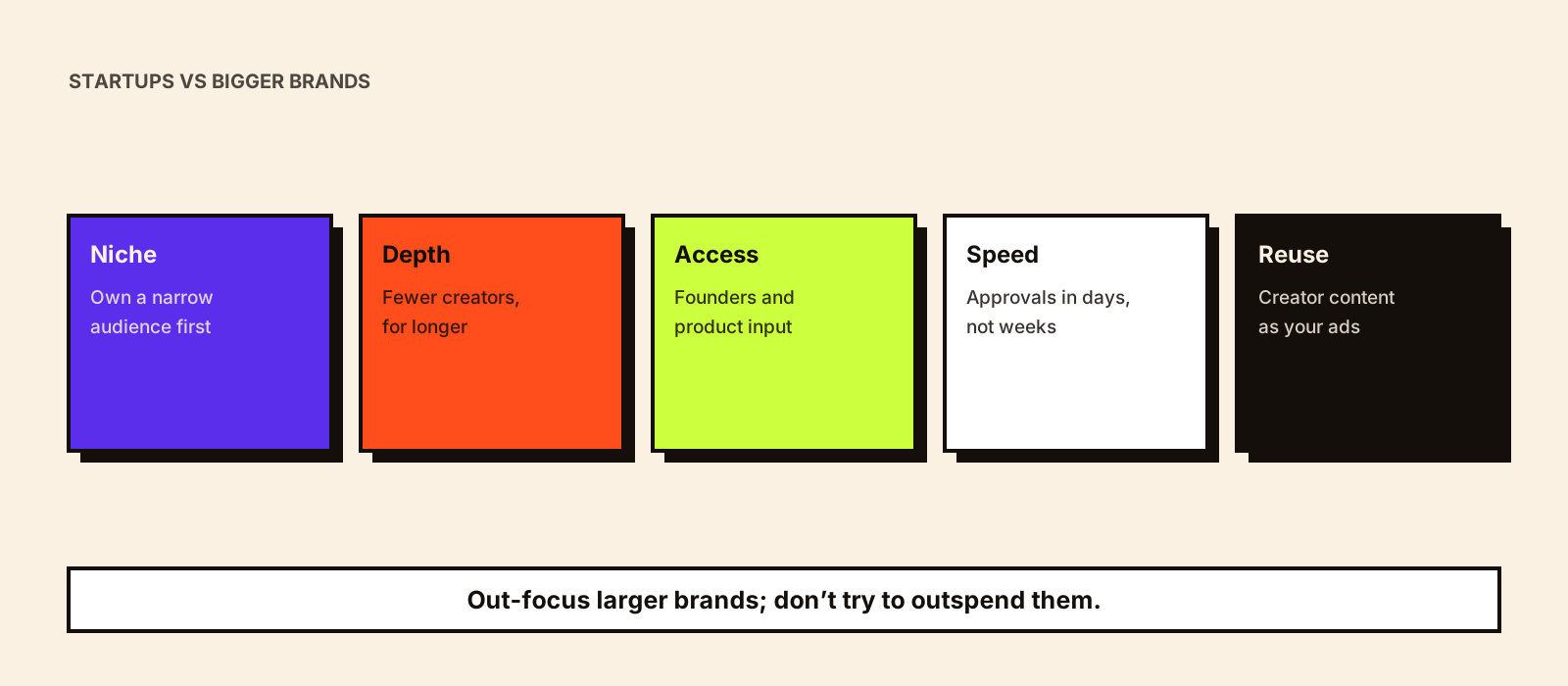
A large brand can book a celebrity, a dozen macro creators and a paid media budget behind them in a single month. A startup trying to match that will run out of money and learn nothing. The startups that do well with creators don't play the same game smaller; they pick ground where size doesn't help, and use advantages a large company finds hard to copy.
Quick answer
Don't try to outspend larger brands; out-focus them. Choose a narrow audience or niche where you can be the most visible brand among the creators who matter, work with fewer creators for longer, give them access to founders and the product team, approve content in days rather than weeks, turn the best creator content into ads, use deal structures larger brands avoid, and look for cities, languages or sub-niches they ignore. Measure progress by cost per customer and share of creator conversation in your niche, not by total reach.
Where large brands win, and where they're slow
| Large-brand advantage | Why it's hard to match | Startup counter |
|---|---|---|
| Budget for reach | Celebrity and macro fees, plus media behind them | Concentrate on a niche where a few creators reach most of your buyers |
| Existing awareness | People already know the name | Creators who explain why the product exists and who it's for |
| Exclusivity deals | Category exclusivity keeps top creators away from rivals | Rising creators before they're signed up; specialists that big brands overlook |
| Legal and brand teams | Thorough review, but often slow and script-heavy | Fast, light approvals within clear guardrails |
| Long relationships | Retained ambassadors in mainstream categories | Genuine involvement: early access, product input, founder contact |
Long-term creator deals are now common among larger advertisers too: the WPP Media and Kantar India Influencer Marketing Report (June 2025) found 72% of surveyed Indian brands favour long-term influencer partnerships, and 95% leaned towards macro influencers for content control and brand safety. That leaves room for startups among specialist and rising creators.
1. Own a niche before you chase a category
'Skincare' belongs to the giants. 'Skincare for oily skin in humid coastal cities' or 'protein snacks for runners' can belong to you. Pick a niche small enough that you can work with a meaningful share of the creators your buyers trust in it, then expand to the next niche once you're the brand those creators mention. Influencer market mapping shows how to see which creators competitors already use and where the gaps are, and competitor influencer research covers what to learn from rivals' creator activity.
2. Go deep with fewer creators
A creator mentioning you once is an ad. The same creator using your product for months, answering followers' questions about it and including it unprompted is a recommendation. Rebook the creators who work, move them onto longer agreements, and let their audiences see the product repeatedly. Depth also costs less to manage than constant new sourcing. How to structure it is covered in long-term influencer partnerships.
3. Give creators what big brands can't: access
- A call with the founder about why the product exists, so creators explain it in their own words.
- Early samples and a real channel for feedback, with visible changes when their feedback is right.
- Behind-the-scenes material (the factory, the formulation, the first customer) that makes content more interesting than a product shot.
- Credit where it's due: if a creator's suggestion shapes a product, say so publicly.
Only offer what's genuine. A token 'advisory role' with no influence is noticed quickly, by creators and their audiences. Structured feedback loops are covered in creator feedback loops.
4. Use speed as a weapon
Trends, news and seasonal moments reward brands that can brief, approve and publish within days. A startup can agree in advance what creators may do without fresh approval (topics, claims, disclosure wording, no-go areas) and keep one decision-maker on call. Speed doesn't mean skipping substantiation or disclosure: those rules apply to a startup exactly as they apply to a market leader.
5. Turn creator content into your ad engine
A startup's own ad creative is often its weakest asset. Creator content made under clear usage rights can be tested as paid ads, including partnership ads that run from the creator's handle. Meta's own October 2026 creator white paper reports that, across 20 EMEA conversion lift studies, campaigns with at least 30% partnership ads had a 45% lower median cost per incremental purchase than business-as-usual campaigns. That is the platform's own analysis at 92% confidence, summarised by PPC Land, so treat it as a reason to test on your account, not a forecast. Negotiate rights before production; influencer usage rights and Instagram partnership ads explain how.
6. Use deal structures larger brands avoid
| Structure | Why it suits a startup | Watch for |
|---|---|---|
| Fee plus commission | Lower fixed cost; rewards creators who sell | Commission alone rarely attracts good creators; pay a fair base |
| Affiliate or referral programs | Scales with results; customers can join too | Tracking gaps; disclosure still required |
| Co-created products or limited editions | Gives creators a real stake and a story | Agree IP, credit and revenue share in writing |
| Equity or long deferred payments | Possible for a very close partner | Take legal and tax advice; keep most creator deals simple |
More on commission-based setups in influencer affiliate programs, and on structuring fees around results in performance-based influencer marketing.
7. Find the whitespace: cities, languages and sub-niches
In India, national campaigns often lean on English-language creators in the metros. Regional-language creators and creators in tier 2 and tier 3 cities can reach buyers who see far fewer brand collaborations. The same logic applies elsewhere: Arabic-language creators in specific Gulf markets, or community creators in a particular UK city. See regional and vernacular influencer marketing and influencer marketing in tier 2 and tier 3 cities.
What not to copy from larger brands
- A celebrity to borrow credibility. The fee buys reach, but a startup usually needs proof and explanation more.
- Short bursts of reach with nothing after them. Without follow-up, the attention fades before people buy.
- Heavily scripted content. It reads as an ad, and startups lose their main advantage, authenticity.
- Measuring success in impressions. A startup needs customers at a sustainable cost.
- Comparative claims against a named competitor without evidence. They invite complaints; substantiate every comparison and have it reviewed.
How to know if you're winning
| Measure | How to track it | Why it matters |
|---|---|---|
| Cost per customer from creators | Tracked orders plus sales lift, against total creator cost | Shows whether the channel is sustainable |
| Share of creator conversation in your niche | Count posts mentioning you and named competitors among the creators you track each month | Shows whether you're becoming the brand your niche talks about |
| Unprompted mentions | Creators and customers posting about you without a deal | The clearest sign of real advocacy |
| Creator rebooking rate | Share of creators you'd book again, and who'd work with you again | Depth is the strategy; this tests it |
| Branded search | Search Console and marketplace search terms | Picks up demand that codes miss |
If you're still deciding whether creators make sense at all, start with is influencer marketing worth it for a small business or startup, and for a first campaign plan see influencer marketing for startups.
Conclusion
Startups compete with larger brands through creators by refusing to fight on reach. Own a niche, go deep with the creators who work, give them access a big company can't, move faster, turn their content into ads and look where competitors aren't. Measure customers and conversation share, and expand niche by niche.