How to Build an Influencer Creative Strategy That Supports Business Goals
The layer between your marketing strategy and a campaign brief: the message, the proof, the role each creator plays, which formats fit which objective, what stays fixed and what creators decide, and how you'll learn what works.
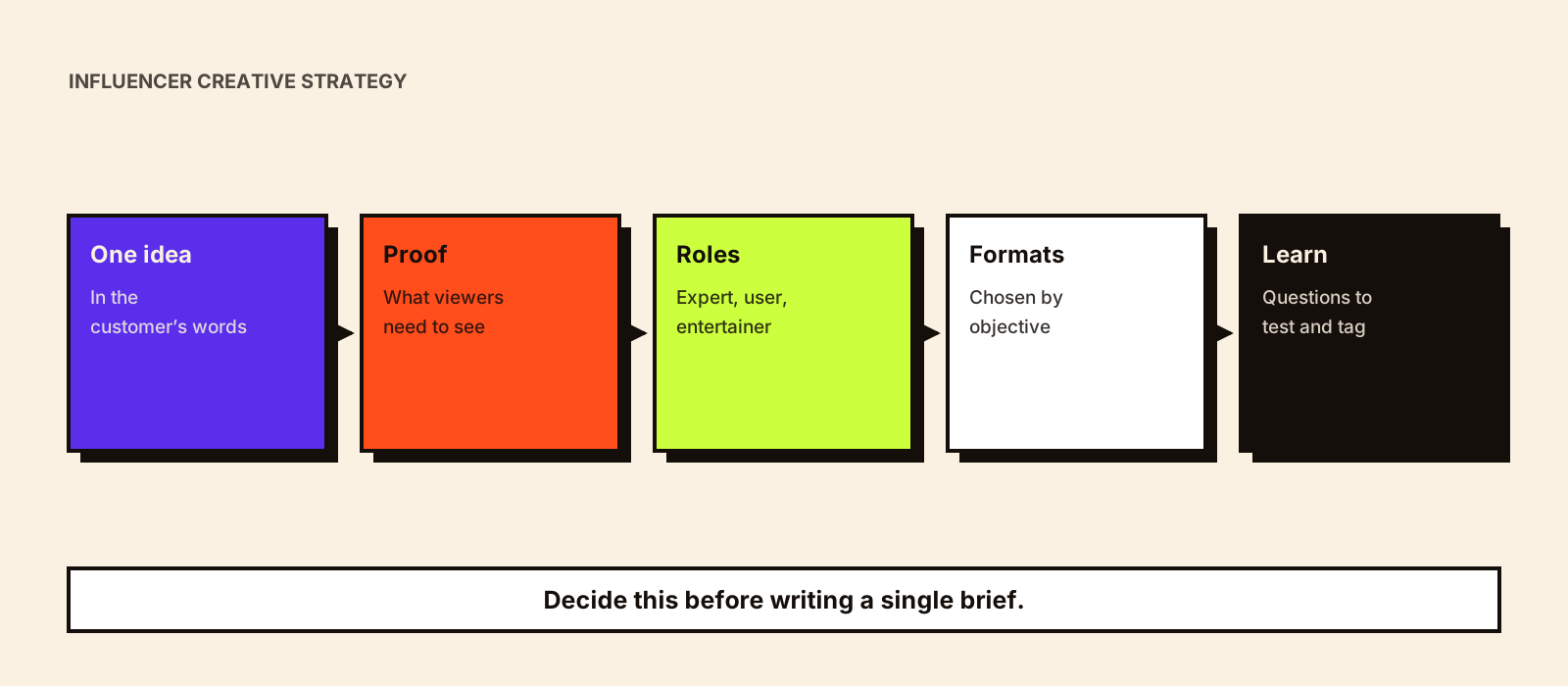
Many creator campaigns go straight from 'we want sales' to a brief listing deliverables. The creators then guess at the message, every video says something slightly different, and the report can't explain why some content worked. A creative strategy fills the gap: it decides what the brand needs people to believe, what proves it, and how creators will show it, before anyone writes a brief.
Quick answer
An influencer creative strategy sets five things for a campaign or a quarter: the one idea you want people to take away, the proof that makes it believable, the role each type of creator plays, the formats that fit each objective, and the line between what's fixed and what creators decide. Add a short list of creative questions you want to answer by testing. The brief then turns this into instructions for each creator.
Where creative strategy sits
| Layer | Answers | Changes |
|---|---|---|
| Influencer marketing strategy | Why creators, which audiences, budget, platforms, how success is measured | Yearly |
| Creative strategy | What we say, what proves it, who says it, in which formats, what we're testing | Per campaign or quarter |
| Brief | What this creator makes, by when, with which must-haves | Per creator |
| Content | The creator's own execution | Per post |
The business-level plan is covered in influencer marketing strategy, and turning creative strategy into instructions in the influencer campaign brief.
1. One idea and the proof behind it
- The idea: one sentence the audience should remember, written in their words, not the brand's. 'It actually stays on through a 12-hour shift' beats 'long-lasting formula'.
- Where it comes from: customer reviews, support tickets, sales calls and comments on competitor posts. Customer language makes better creative than brand language.
- The proof: what a viewer needs to see to believe it. A demonstration, a before and after under honest conditions, a comparison, a price breakdown or an expert explanation.
- Claims you can substantiate: write the approved claims list now, so no creator invents one.
Collecting customer language is covered in customer insights for influencer briefs.
2. Give each creator type a role
| Role | Typical creators | Job in the campaign |
|---|---|---|
| Expert | Dermatologists, engineers, chefs, financial professionals (qualified where rules require) | Explain why it works; answer objections |
| Everyday user | Micro and nano creators who match the customer | Show real use and honest reactions |
| Entertainer | Comedy, storytelling and trend creators | Earn attention from people not yet looking |
| Community voice | Regional, language or niche community creators | Make it relevant to a specific group |
3. Formats by objective
| Objective | Formats that usually fit | Why |
|---|---|---|
| Reach new audiences | Short-form video (Reels, Shorts, TikTok where available), Collab posts | Recommendation feeds show it to non-followers |
| Explain or educate | Long-form YouTube, carousels, podcasts, LinkedIn posts for B2B | Room to show and explain |
| Drive a click or purchase now | Stories with link stickers, pinned comments and description links, live shopping | The format carries a direct next step |
| Build trust for a considered purchase | Reviews, comparisons, 'one month later' follow-ups | Viewers want depth and honesty |
| Supply ad creative | Raw footage, multiple hooks, vertical and square cuts | Paid testing needs variations |
| Retention and repeat purchase | Tutorials, routines, 'how I use it' content | Helps customers get value after buying |
No format or length guarantees performance; these are starting points to test. Platform choice is covered in Instagram vs YouTube vs TikTok, and format detail in Instagram Stories vs Reels and YouTube Shorts vs long-form.
4. Fixed, flexible and free
| Examples | Who decides | |
|---|---|---|
| Fixed | The core idea, approved claims, product shown correctly, disclosure, legal must-haves | The brand |
| Flexible | The proof used, the hook, the format within the brief, the call to action wording | Agreed between brand and creator |
| Free | Script, setting, humour, tone, editing style | The creator |
The tighter the fixed list, the more creator content looks like an ad and the less it performs like creator content. Influencer brand consistency covers this balance in more depth.
5. Decide what you want to learn
- Write two or three creative questions per campaign, for example: does a price comparison beat a texture demo for first orders?
- Tag every piece of content with the variables you care about (hook type, proof type, creator role, format) when it goes live.
- Read results by tag, not just by creator, so learnings survive when creators change.
- Carry the answers into the next creative strategy.
Openings are covered in UGC ad hooks, structured experiments in creator campaign testing, and analysing winners in influencer content performance.
A one-page creative strategy
Objective and primary KPI:
Audience (in their words):
The one idea:
Proof we'll show:
Approved claims / claims to avoid:
Creator roles and how many of each:
Formats per objective:
Fixed / flexible / free:
Creative questions to answer:
Disclosure and market rules:
Where the content will be reused (and rights needed):
Hypothetical example
Hypothetical. A sunscreen brand's reviews keep mentioning 'no white cast on darker skin'. That becomes the idea. The proof is an unfiltered application on camera in daylight. Two dermatologists explain the filters used (the expert role), twelve everyday creators with a range of skin tones show application and a midday check (the everyday role), and three comedy creators make the 'white cast' problem relatable (the entertainer role). Reels carry reach, Stories carry the offer, and raw clips are licensed for ads. The creative question: does the midday check or the application shot make the better opening for first orders?
Common mistakes
- Several messages in one campaign, so none is remembered.
- Claims creators can't show, or the brand can't substantiate.
- Every creator asked to do every job.
- Choosing formats by habit rather than by objective.
- No tagging, so results can't explain why content worked.
Conclusion
A creative strategy is short: one idea, its proof, creator roles, formats by objective, a clear line between fixed and free, and the questions you want answered. Done before the brief, it makes creator content more consistent without making it scripted, and it turns each campaign into learning for the next.