How to Plan for Platform Changes and Reduce Influencer Marketing Dependency Risk
Platforms change rules, metrics and even availability with little notice. Real examples from recent years, the four kinds of platform risk, and practical ways to reduce dependence: spreading creators and platforms, owning the relationship and the data, licensing content broadly enough, and agreeing what happens when a platform changes mid-campaign.
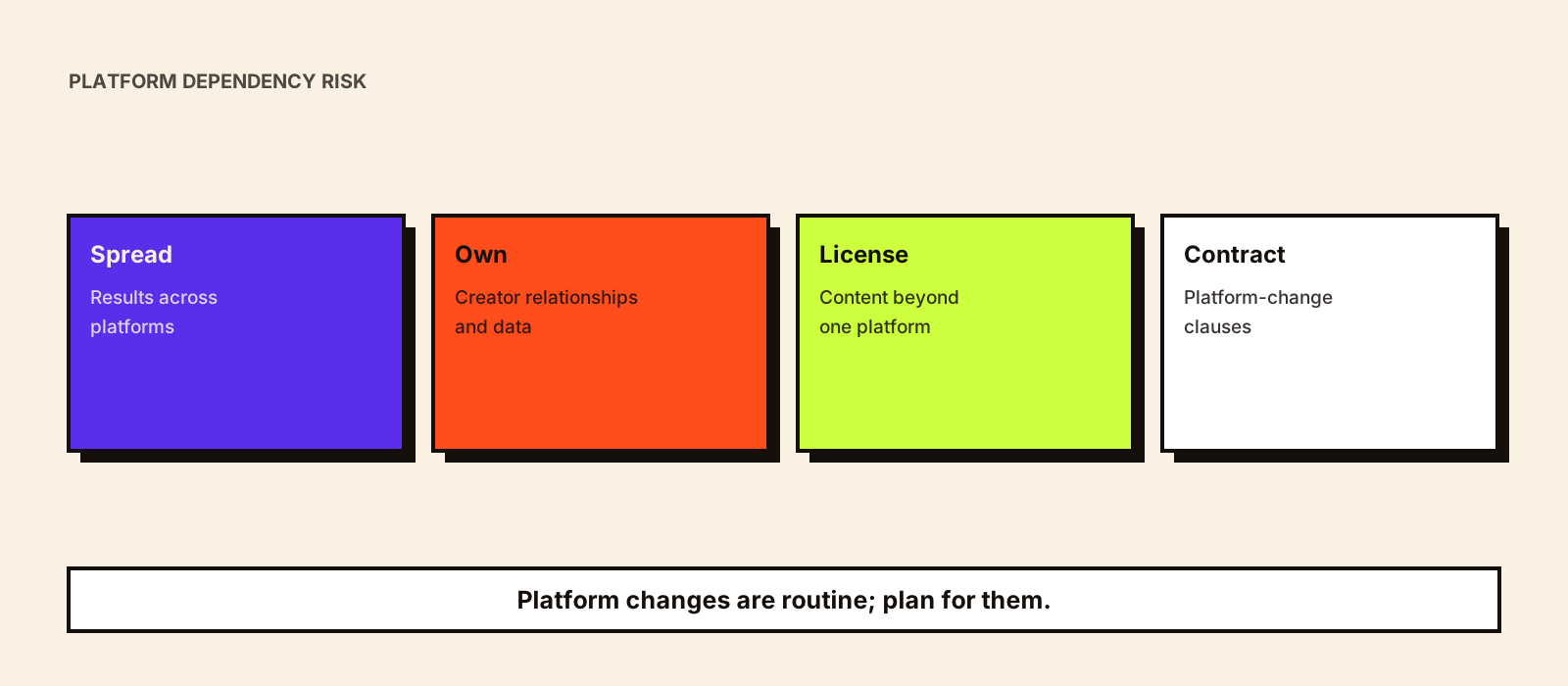
Every creator campaign runs on someone else's platform. The platform decides who sees the content, how it's measured, which ad formats exist and, occasionally, whether it's available in a country at all. Brands that built their creator programs around a single platform have learned this the hard way. You can't prevent platform changes, but you can make sure one change doesn't stop your program.
Quick answer
Reduce platform dependency by keeping no single platform responsible for most of your creator results, building direct relationships with creators rather than relying on one platform's tools, licensing content for use across platforms and your own channels, turning creator audiences into your own (email, WhatsApp, customers) with consent, and writing platform-change clauses into contracts. Review exposure each quarter.
Recent changes that show the risk
| Change | What it meant for brands |
|---|---|
| TikTok blocked in India (2020) | Creator programs built on TikTok had to move to other platforms; the block remains in place |
| Instagram replaced impressions and plays with views (2025) | Year-on-year reports needed relabelling; metrics weren't comparable |
| YouTube counted views from the first frame (from 24 August 2026) | View counts rose; engaged views became the comparable figure |
| Australia's minimum age for social media accounts | Youth-focused campaigns had to rethink audiences and platforms |
| Recommendation and originality changes on Instagram | Reposted or aggregated content became less likely to be recommended |
Sources and detail: the government statement on TikTok in India, YouTube's explanation of engaged views, reach vs impressions vs views, Australia's under-16 social media rules for brands and Instagram algorithm changes.
Four kinds of platform risk
| Risk | Example | Impact |
|---|---|---|
| Availability | A platform blocked or restricted in a market | Campaigns and creators lost overnight |
| Distribution | Ranking or recommendation changes | Reach falls for the same content and fees |
| Measurement | Metric definitions or API access change | Reports stop being comparable; tools break |
| Commercial tools | Ad formats, creator marketplaces or shopping features change or launch only in some countries | Paid plans and shoppable content need rework |
Ways to reduce dependency
- Spread results: track the share of creator results by platform, and set a ceiling (for example, no platform above a level you agree) for always-on programs.
- Own the relationship: keep creator contacts, contracts and performance history in your own CRM, not only inside a platform's tools.
- License for flexibility: secure rights to reuse creator content on other platforms and your own channels, so a platform change doesn't strand the content.
- Build owned audiences: convert creator interest into email, WhatsApp or customer relationships, with opt-in.
- Keep raw files: store raw footage and edits in your content library, not only as posts.
- Define metrics yourself: write KPI definitions that survive metric changes, and record which platform definition applied.
- Test a second platform before you need it, at small scale.
Platform choice is compared in Instagram vs YouTube vs TikTok, storing content and rights in how to build an influencer content library, follow-up with consent in influencer retargeting, and creator records in the influencer marketing CRM guide.
Contract clauses for platform changes
- If a platform becomes unavailable, restricted or changes a format before posting, the parties agree an equivalent deliverable on another platform, or a proportionate refund.
- If metrics change, reporting uses the closest equivalent metric and states the change.
- If an ad permission tool changes, the creator agrees to grant equivalent permission through the replacement.
- Usage rights name the content, not just the platform post, so content can move with you.
Contract basics are in influencer marketing contracts; this is general guidance, not legal advice.
A quarterly exposure check
| Question | Healthy answer |
|---|---|
| What share of creator results came from one platform? | Below the ceiling you set |
| Could we run next month's campaign if our main platform changed tomorrow? | Yes, with creators and rights already in place elsewhere |
| Do we hold creator contacts and content outside the platforms? | Yes, in our CRM and content library |
| Are our KPI definitions documented, with the platform definition recorded? | Yes |
| What share of customers from creators are now reachable directly? | Rising, through opted-in channels |
Common mistakes
- Building an entire program on one platform because it works today.
- Licensing content for one platform only.
- Keeping creator relationships only in a platform's messaging or marketplace.
- Comparing metrics across a platform's definition change without noting it.
Conclusion
Platform changes are routine, and some are sudden. Spread results across platforms, own the creator relationships and content rights, build opted-in audiences, put platform-change clauses in contracts, and check exposure every quarter.