How to Personalize Influencer Outreach at Scale Without Sounding Automated
A method for personalising outreach to dozens or hundreds of creators: three personalisation levels, a two-minute research card, segment templates, the specific-line rule, how to use AI without sounding like it, and a human review step.
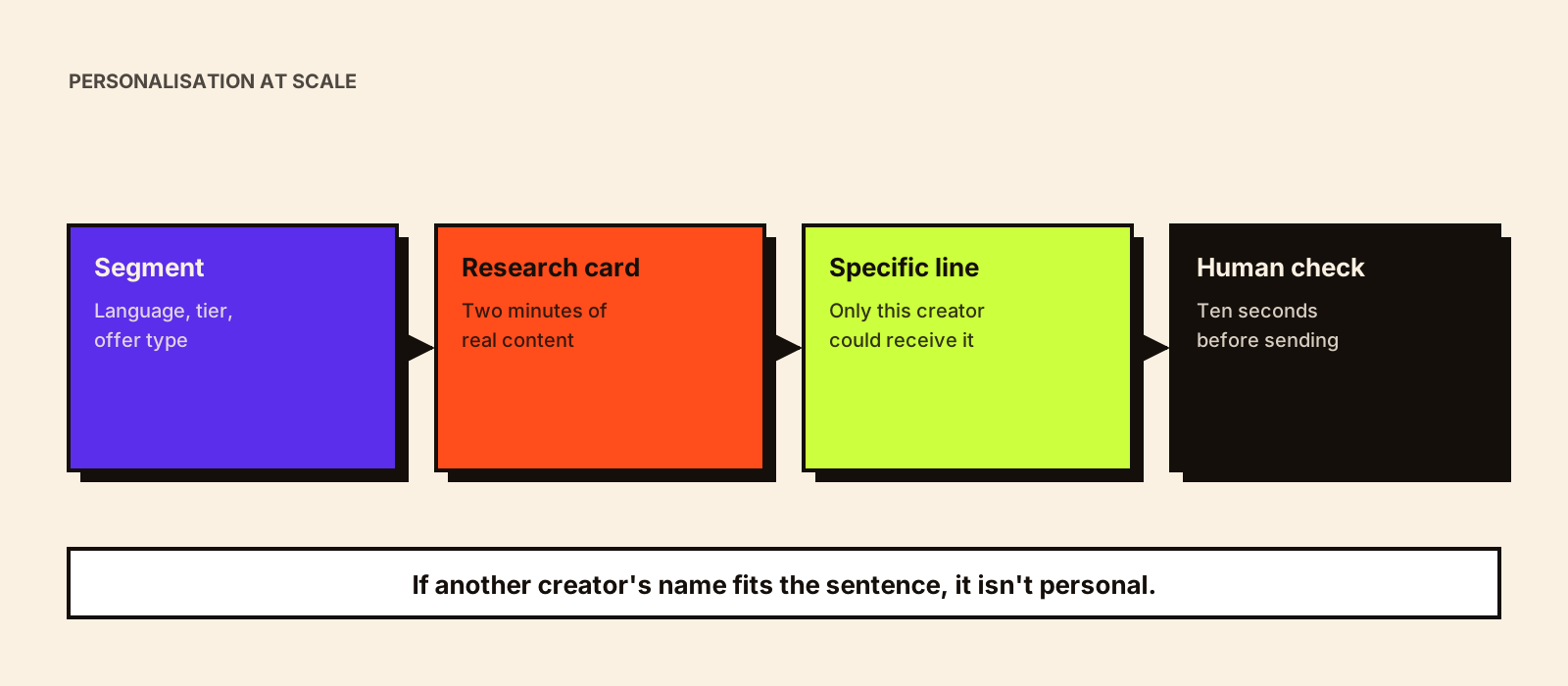
Creators can spot a mail merge in one line. 'Hi Priya, we love your amazing content!' tells them nothing except that you have a template with a name field. The opposite extreme, writing every message from scratch, doesn't work when a regional seeding programme needs 150 creators. The answer is a system where most of the message is reused and the part that matters is genuinely specific.
Quick answer
Personalise influencer outreach at scale by splitting each message into a reusable part (who you are, the offer, terms, next step) written per creator segment, and a specific part (one or two sentences about the creator's actual content and why they fit) written from a short research card. Group creators by language, tier and content type so templates feel relevant, keep the offer details accurate for each segment, and have a person check every message before it goes. AI can help draft the specific line from your notes, but it shouldn't invent observations.
Three levels of personalisation
| Level | What changes per creator | Effort | Use for |
|---|---|---|---|
| 1. Segment | Template chosen by language, tier and content type; name and handle | Low | Large seeding programmes; opt-in marketplace invitations |
| 2. Specific line | Segment template plus one or two lines about a real post and why they fit | Moderate (2–3 minutes each) | Most paid and gifted outreach |
| 3. Bespoke | Written individually after watching more content | High | Priority creators, ambassadors, high-value deals |
Most campaigns use a mix: bespoke messages for the top tier, specific-line messages for the rest of the shortlist, segment messages only for large opt-in programmes. Influencer ranking explains how to decide which creators are the top tier.
The two-minute research card
Recent post to reference: [link + one-line description]
What they're good at: [e.g. 'honest budget comparisons', 'clear Tamil explainers']
Why they fit this campaign: [audience, topic, format, region]
Language to write in: [ ]
Anything to avoid: [competitor deal, sensitive topic, they've said they don't do X]
Personal detail? Only work-related. Not family, location or anything private.
The card is the only part that requires attention to the individual creator. Filling it while watching recent content keeps the specific line honest.
The specific-line rule
A specific line is something only this creator could receive. A useful test: if you swapped in another creator's name, would the sentence still be true? If yes, it's not specific.
| Generic | Specific |
|---|---|
| We love your content! | Your monsoon commute video, where you tested three raincoats on a scooter, is exactly the problem our jacket is designed for. |
| You'd be perfect for our brand. | Most of your comments are from Pune and Nashik, which is where we're launching first. |
| Your audience is so engaged! | People in your comments keep asking for affordable skincare that works in humid weather; that's what we make. |
Build templates by segment, not one for everyone
Segment creators before writing templates. The offer, tone and language should change across segments even if the structure stays similar:
| Segment | What changes in the template |
|---|---|
| Language (Hindi, Tamil, Marathi, English…) | Language of the message; examples and references |
| Tier (nano, micro, mid, macro) | Formality; whether you address a manager; how terms are presented |
| Offer type (paid, gifted, affiliate, ambassador) | What you're asking and what's in it for them |
| Content type (reviewer, educator, entertainer, UGC) | What you'd like them to make and how much creative freedom |
| Relationship (new, past partner, fan) | Warmth and context; past partners shouldn't get a cold template |
Message structures and examples for each offer type are in influencer outreach email.
Using AI without sounding like AI
- Give AI your research card, not just a profile link, so it works from what you actually observed.
- Ask for one or two plain sentences, not a paragraph of compliments.
- Delete adjectives like 'amazing', 'incredible' and 'stunning'. Creators read them as automation.
- Never let AI invent details about a creator's content. If it says something you didn't see, remove it.
- Translations for regional creators should be checked by someone who reads the language.
AI influencer campaign management covers wider uses of AI in campaign communication.
Human review before sending
□ Name, handle and platform correct
□ Specific line refers to a real post and is accurate
□ Offer type clear (paid / gifted / affiliate)
□ Right language and tone for the segment
□ No leftover template text ([brackets], wrong product)
□ Not already contacted by a colleague or on another channel
The last check matters more as volume grows. A creator who gets two different messages from the same brand on the same day concludes nobody is paying attention. An influencer marketing CRM prevents this.
How long does it take?
With research cards and segment templates, a specific-line message usually takes a few minutes per creator, most of it watching content. That's slower than a mail merge and much faster than writing from scratch. The time is well spent: the research also tells you whether the creator is a good fit before you invest in a conversation.
Hypothetical example
Hypothetical: a snack brand plans outreach to 90 creators across Hindi, Gujarati and Marathi. It writes six segment templates (three languages × paid or gifted), fills research cards for all 90 over two days, writes bespoke messages for the 12 priority creators and specific-line messages for the rest. A teammate reviews each batch before sending. Every creator gets a message in their language that mentions something they made and states clearly whether the offer is paid.
Segment templates in practice
| Segment | Opening approach | Offer framing |
|---|---|---|
| Regional nano creators (gifted) | In their language; reference a specific post; warm and simple | No obligation; explain disclosure simply |
| Micro creators (paid) | Specific post and audience reason | Clear deliverable, timing and 'paid' upfront |
| Managed mid-tier creators | Address manager; name the creator and why | Everything needed to quote in one message |
| Expert creators (doctors, CAs, trainers) | Reference their expertise and a specific explanation they gave | Respect professional rules; no scripted claims |
| Past partners | Mention the last collaboration and its result | A specific next opportunity |
Personalisation without crossing lines
- Reference their work, not their private life.
- Don't mention family members, health or location details they haven't linked to their content.
- Don't reference old controversies or comments.
- Don't imply a relationship you don't have ('as a long-time fan…') unless it's true.
Measuring whether personalisation helps
Tag each message with its personalisation level (segment, specific line, bespoke) and compare reply and positive-reply rates over a few campaigns. Influencer response rate covers what else to track.
Common mistakes
- Personalising the greeting and nothing else.
- Over-flattering. One accurate sentence beats three compliments.
- Using personal details (family, location, life events) creators haven't connected to their work.
- One template for every language and tier.
- Letting AI write observations nobody verified.
Conclusion
Personalisation at scale is a system: segment templates for what can be reused, a quick research card for what can't, one honest specific line per creator and a human check before sending. It respects creators' time and makes replies more likely. For the logistics of sending and following up at volume, see influencer outreach automation.