Retail Media and Influencer Marketing: How D2C Brands Can Combine Both
Creators make people want a product and search for it. Sponsored ads on Amazon, Flipkart and quick-commerce apps decide whose listing they find when they do. How to plan the two together: timing, budget split, creator video in ads and measurement that works in India.
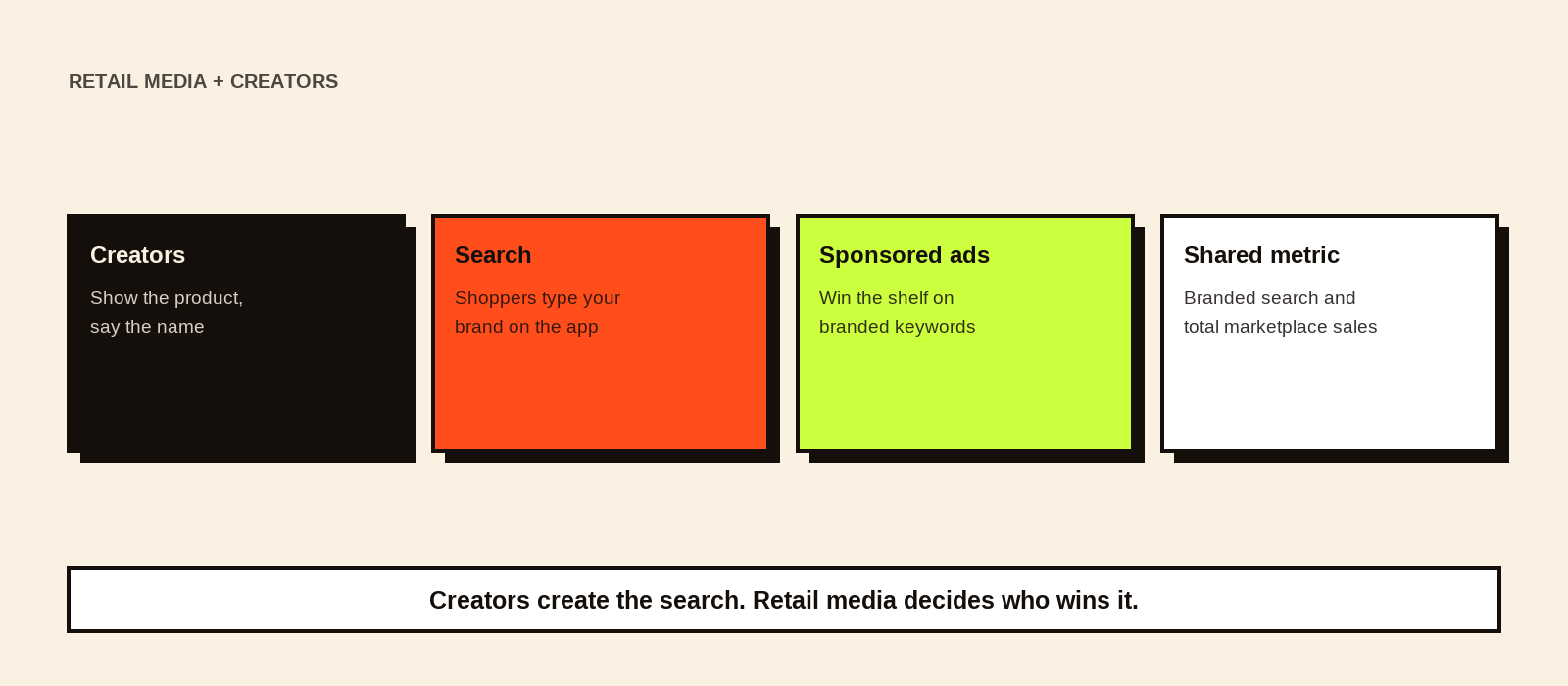
Most D2C brands run influencer marketing and marketplace ads as two separate budgets, often owned by two separate people. The creator team reports reach. The marketplace team reports ACoS. Neither can explain why sales jumped the week a creator posted, or why sponsored ads got expensive the week nobody did. On Amazon, Flipkart, Blinkit, Zepto and Instamart, the two channels do different halves of the same job, and planning them together is where most of the value sits.
Quick answer
Retail media is advertising sold by a retailer or marketplace on its own shelf, such as Amazon Sponsored Products, Flipkart Ads and in-app ads on quick-commerce apps. Influencer marketing creates demand off the shelf: people see a creator use the product, then search for it on the app they buy from. Combine them by booking sponsored budgets on your branded and category keywords for the days creators post, using creator video in your ads where the platform allows it, and judging both on brand-search lift and total marketplace sales rather than each channel's own dashboard.
Why the two channels need each other
Creators are good at the part of buying that happens before a shopper opens a marketplace app: noticing a problem, seeing a product solve it, and remembering the brand name. Retail media is good at the moment after: the shopper types a search and chooses between the listings in front of them. A creator post without shelf visibility sends interest to whichever listing ranks for that search, sometimes a competitor's. Sponsored ads without creator demand compete for the same limited pool of shoppers already searching the category, which is usually the most expensive traffic on the platform.
Google's own festive research points the same way. In a Google-commissioned Ipsos survey of Indian festive shoppers (n=2,450, September to November 2025), 73% said they look to online creators for inspiration, and 7 in 10 who spot products on social feeds turn to Google Search to evaluate them. Discovery and evaluation are separate steps, often on separate platforms, and the marketplace is where many of those evaluations end.
| Influencer marketing | Retail media | |
|---|---|---|
| Main job | Create demand and brand recall | Capture demand at the point of purchase |
| Where it runs | Instagram, YouTube, creators' own channels | Amazon, Flipkart, quick-commerce apps, other retailers |
| Strongest at | New customers who didn't know you | Shoppers already searching your brand or category |
| Typical blind spot | Can't see the sale when it happens on a marketplace | Takes credit for demand it didn't create |
| Best shared metric | Brand-search volume and total marketplace sales | Brand-search volume and total marketplace sales |
How big retail media has become in India
WPP Media's This Year Next Year forecast, as reported by BestMediaInfo in December 2025, put Indian retail media at ₹24,280 crore in 2025 and forecast ₹30,360 crore for 2026, about 15% of total advertising revenue, with Amazon and Flipkart the largest players and quick-commerce ad revenue growing fast from a small base. Bain's How India Shops Online 2026 report estimates that e-retail ads were about a quarter of India's digital ad spend in 2025.
Treat any single number with care. Industry reports define retail media differently (some include only marketplace search ads, others include quick commerce, off-site display and retailer video), and their estimates differ by more than double as a result. The direction is consistent, though: a growing share of brand budgets is spent on the shelf, which makes it more important that creators send shoppers to that shelf searching for you by name.
Five ways to make them work together
1. Protect your brand keywords during creator bursts
When creators post, searches for your brand name and product name rise on the marketplace. Competitors bidding on your brand terms can intercept that traffic. Raise Sponsored Products and Sponsored Brands budgets on branded keywords for the posting window and the following one to two weeks, so the listing a creator's viewer finds first is yours. This is usually cheaper than category keywords and protects the demand you've already paid creators to create.
2. Brief creators to say the words people will search
A creator who says 'search for [brand] [product] on Amazon' or shows the search bar on screen produces more findable demand than one who says 'link in bio'. Agree with the creator on the exact name, the variant to search for and which app to mention. Then make sure that phrase is in your listing title and in your sponsored keyword list. On quick-commerce apps, where shoppers rarely browse deeply, an exact product name in the creator's voice-over matters even more; see the quick-commerce influencer marketing guide for how availability by city changes the brief.
3. Use creator video inside your retail ads
Creator demonstrations often make better ad creative than studio product shots, because they answer the questions shoppers have on the listing. Amazon's Sponsored Brands video and video on the product detail page are the obvious homes. Format and market availability change, so check your Amazon Ads console for which video formats are open to your account in India. Whatever the platform, the creator's contract must cover paid usage on retail media, for a stated period; organic posting rights don't include it. Influencer usage rights explains how to word this.
4. Time creator bursts with sale events and stock
Sponsored ads during Big Billion Days, the Great Indian Festival or a quick-commerce launch week are expensive and crowded. Creator content posted one to two weeks earlier builds the brand searches and wishlists that make those ads convert. Check stock and delivery coverage before either goes live: a creator burst that drives shoppers to an out-of-stock listing wastes both budgets. The seasonal influencer marketing guide covers the sale calendar.
5. Look at Amazon's creator programmes
Amazon Ads said in March 2026 that Creator Connections would come to India later in the year, to automatically connect Sponsored Products campaigns with creators from the Amazon Influencer Program. Trade press reported an Indian launch in September 2026; check your Amazon Ads console for current availability and terms. It is the first native bridge in India between sponsored product spend and creator content, and it suits brands that sell mainly on Amazon. It doesn't replace a creator strategy: you still decide which creators fit your customer and what they should show.
Splitting the budget between creators and retail media
There's no universal ratio. The right split depends on how much demand already exists for your brand, what share of sales happens on marketplaces, and your margin after marketplace fees. A useful way to think about it is by the job each rupee does.
| Your situation | Lean towards | Why |
|---|---|---|
| New brand, few branded searches yet | More creator spend, modest branded retail media | There's little demand to capture until creators create it |
| Established brand, strong branded search | More retail media, steady creator flow | Demand exists; protect and convert it, keep creators feeding recall |
| Category leader facing competitor conquesting | Branded keyword defence plus creators who compare honestly | Hold the shelf while giving shoppers reasons to choose you |
| Launch week on a marketplace or quick-commerce app | Creator burst first, sponsored budget for the posting window | Ads convert better once people already know the name |
| Thin margins after marketplace fees | Fewer, better-tracked creators; tight branded ads only | Category keyword auctions and broad creator reach can both lose money |
Whatever the split, decide it from contribution margin per marketplace order, not from either channel's ROAS. Marketplace commissions, fulfilment fees and ad spend all come out of the same order. How to calculate the break-even point of an influencer campaign and how to plan an influencer marketing budget both show the arithmetic.
Illustrative figures: a skincare brand selling mainly on Amazon plans a ₹6 lakh month. It books ₹3.5 lakh of micro-creator content across two weeks, raises branded Sponsored Products and Sponsored Brands spend by ₹1 lakh for those weeks and the week after, and keeps ₹1.5 lakh on category keywords as usual. It then compares branded search volume, branded ad cost per click and total Amazon sales with the previous four weeks. These numbers are hypothetical, not a benchmark.
Measuring the combined effect in India
The tools that make this easy elsewhere are limited here. Amazon Attribution, which reports sales from outside traffic, is not listed by Amazon for amazon.in (its FAQ lists Canada, Mexico, the US, Germany, Spain, France, Italy, the Netherlands and the UK). The Brand Referral Bonus, which pays sellers for external traffic, was announced for US sellers only. So build measurement from signals you do have.
- Branded search volume on the marketplace (Amazon Brand Analytics if you're brand-registered, Flipkart seller insights) before, during and after creator posts.
- Branded keyword performance in your ad console: impressions, clicks and cost per click on your own brand terms usually move with creator activity.
- Total marketplace sales against a baseline period, and against cities or weeks without creator activity where you can create them.
- Creator-specific discount codes, knowing many marketplace shoppers won't use them.
- Amazon Influencer Program or Creator Connections reporting, if your creators use those links.
- Post-purchase questions on your own site or packaging inserts: 'Where did you first hear about us?'
Agree before launch which of these will decide success, and report creators and retail media together. If branded search rose and branded cost per click fell during a creator burst, the creators made your ads cheaper, even if few people used a code. Influencer marketing incrementality covers holdout tests for when you need a firmer answer. For the wider decision about where creator links should point when you also sell on your own site, see where to send influencer traffic when you sell everywhere.
Listing readiness comes first
Neither channel works if the listing doesn't convert. Before you combine them, check the basics on every marketplace you'll send people to: a title containing the words creators will say, images and video that show the product in use, enough reviews to be credible, clear variant names, stock in the cities you're targeting and a price consistent with your other channels. Creator videos are often the fastest way to fill listing gaps such as missing demonstration video. The guide to influencer marketing for Amazon and Flipkart sellers covers listing readiness and the rules on reviews in detail.
Common mistakes
- Running a creator burst while branded ads are paused, then watching competitors' sponsored listings take the searches.
- Judging creators only on discount-code orders when most sales happen on a marketplace without codes.
- Judging retail media on ROAS without asking how much of that demand creators created.
- Using creator video in marketplace ads without paid-usage rights in the contract.
- Telling creators to say 'link in bio' when your customers buy by searching an app.
- Sending creator traffic to a listing that is out of stock in half the target cities.
Conclusion
Creators create the search; retail media decides who wins it. Plan them as one programme: brief creators with the exact words shoppers will type, protect your branded keywords while they post, reuse their videos as ad creative with the right rights, and judge both on branded search and total marketplace sales. In India, without Amazon Attribution, that shared view is the most honest measure you have.