Creator Intelligence Platform: What Brands Should Expect From Modern Influencer Data Systems
What a creator intelligence platform should contain: data with provenance and freshness, discovery, audience intelligence, explainable scoring, performance history, listening, competitor research, reporting, integrations and human review, plus evaluation questions.
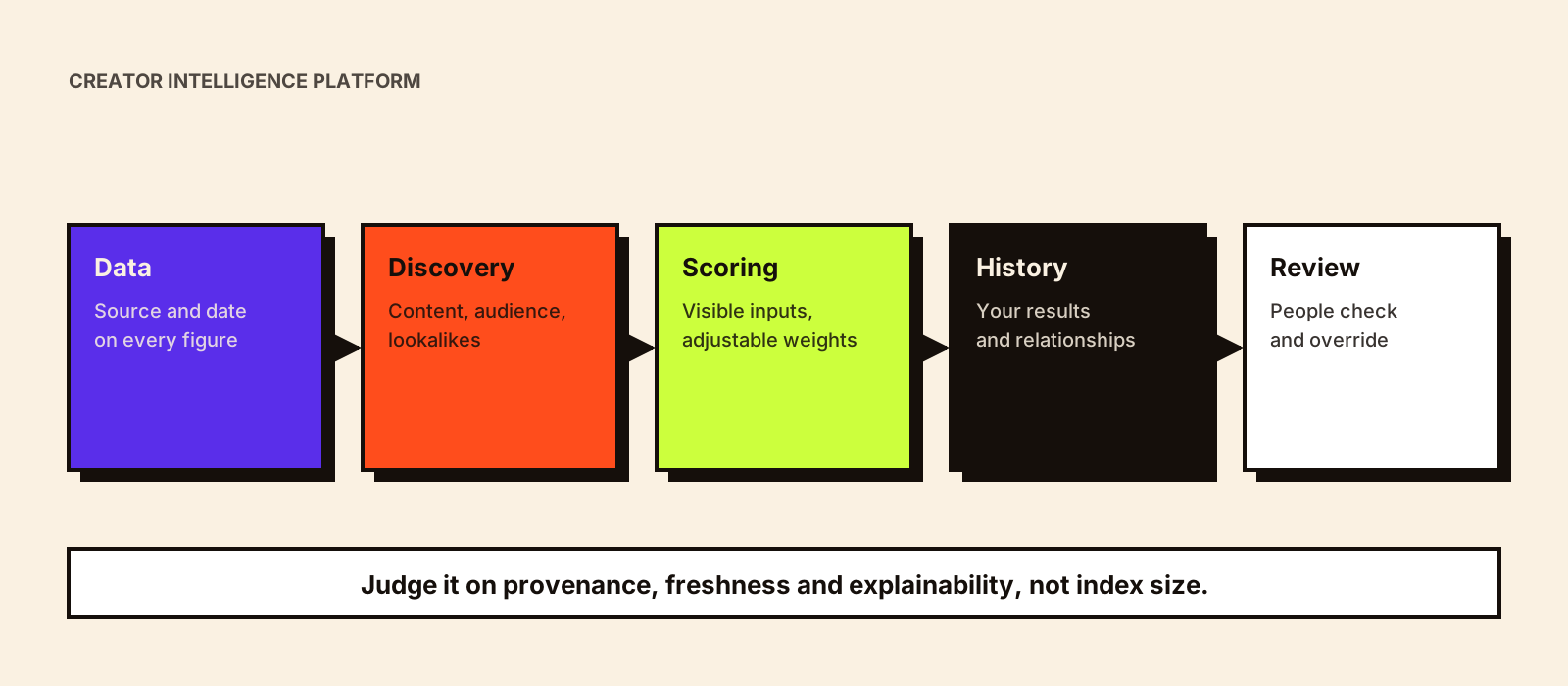
Vendors increasingly describe influencer software as 'creator intelligence'. Sometimes that means a genuine decision system that combines creator data, your campaign history and market context. Sometimes it means a discovery database with a dashboard. Knowing what a real intelligence system should contain helps you tell the difference and decide whether you need one.
Quick answer
A creator intelligence platform should combine trustworthy creator data (with source and freshness shown), discovery, audience intelligence, explainable scoring, your own performance and relationship history, social listening, competitor and market research, reporting and integrations, with clear points for human review. The test is whether it helps you decide and explain who to work with, why and in what role, not how many creators it indexes. Many brands get most of the value from a disciplined data process before buying a platform.
For the operational features any influencer software needs (campaigns, approvals, payments), see influencer marketing software. This guide covers the intelligence layer specifically.
What a creator intelligence platform should contain
| Component | What it should do | Test question |
|---|---|---|
| Data with provenance | Show whether each figure is creator-connected, public or estimated, and when it was captured | Can I see the source and date of this audience number? |
| Data freshness | Refresh profiles, views and audience data on a known schedule | How old is this creator's data, and how do I trigger a refresh? |
| Discovery | Search by content, audience, language, region and lookalikes | Does it find creators I know in my languages and categories? |
| Audience intelligence | Audience location, language, age, interests and quality signals | Does it distinguish audience quality from audience fit? |
| Explainable scoring | Quality, fit and risk scores with visible inputs and adjustable weights | Why did this creator score 4.1, and can I change the weights? |
| Performance history | Your results per creator, normalised across campaigns | Can I compare creators across campaigns with a campaign index or similar? |
| Relationship history | Rates over time, reliability, rights, notes, rebook decisions | Does history stay on the creator record? |
| Social listening | Category conversations, brand mentions, creator voices | Does it cover the platforms and languages that matter to us? |
| Competitor and market research | Competitor collaborations, sponsorship density, market maps | Can it show which creators competitors use repeatedly, with evidence? |
| Reporting | Insights, not just metrics; exportable | Can I trace every number to its source? |
| Integrations | Connects to CRM, campaign tools, analytics, store and ads | Does data flow both ways, or only out? |
| Human review | Workflow for people to check, override and annotate | Can reviewers record why they disagree with a score? |
The two capabilities that separate intelligence from a database
1. Your own history, joined to creator data
Third-party data describes creators. Only your campaigns show how they perform for your brand, at what cost and how reliably. A platform that can't hold and analyse your performance and relationship history is a discovery tool, however good its search.
2. Explainable decisions
Intelligence should produce reasons a person can check: 'audience 58% Karnataka (creator-connected, August), Kannada content, two past campaigns at 1.3× median CPA'. A black-box score of 87 invites either blind trust or none. Creator intelligence explains the decision questions a platform should help answer.
Data freshness and provenance
Stale data is the most common silent failure. Audience composition, views and rates change, sometimes quickly. A good platform shows the capture date beside every metric, refreshes active creators frequently and lets you request a refresh before booking. It also labels estimates clearly. A platform that shows audience location to a decimal place without saying it's modelled is presenting false precision.
Where human review belongs
- Content and brand-fit review before any creator is shortlisted.
- Interpreting fraud and anomaly flags.
- Adjusting scoring weights per campaign.
- Approving final selections and the reasons recorded.
- Checking automated sentiment and theme classifications on samples.
- Post-campaign scorecards that feed history.
Evaluation questions
- Which data is first-party, public or estimated, and is it labelled everywhere it appears?
- How often is data refreshed, by creator group?
- How well does it cover our categories, languages, regions and tiers? Can we test with creators we know?
- Can we import our historical campaign data and keep adding to it?
- Can we see and change how scores are calculated?
- Which platforms and languages does listening cover?
- How does competitor research work, and how complete is it?
- How is creator personal data handled under Indian data protection rules?
- Can we export everything, including our own history and notes?
The wider buying process, trial plans and AI-specific questions are covered in AI-powered influencer marketing tools and creator discovery platforms.
Do you need one?
| Situation | Likely answer |
|---|---|
| A few campaigns a year; small creator pool | No. A structured tracker, scorecards and periodic competitor checks deliver most of the value |
| Regular campaigns, growing history, several team members | Possibly; start with tools that hold your history and explain scores |
| Always-on programme across languages and regions | Often yes, if it covers your markets and integrates with your stack |
| Agency partner already provides intelligence | Check what you'd duplicate; make sure your data is shared with you |
Kudozz is an agency rather than a platform vendor. Its creator discovery work combines technology with human review and delivers shortlists with dated audience data and a written reason for each creator.
Bring your own data
A platform's value depends heavily on the history you put into it. Before evaluating vendors, prepare:
- Past campaigns: creators, deliverables, dates, total costs and results at fixed capture days.
- Scorecards or at least rebook decisions with reasons.
- Usage rights and expiry dates still in force.
- Your data dictionary: how you define each metric.
- Your market map and competitor logs, if you have them.
Influencer marketing data lists the full dataset and how to collect it consistently.
The first 90 days
DAYS 1–30: Import history; map fields to your data dictionary; test coverage with creators you know; set scoring weights per objective
DAYS 31–60: Run one campaign's discovery, shortlisting and ranking through the platform alongside your current method; compare outcomes
DAYS 61–90: Review: did it surface better creators, explain decisions and save time? Keep, adjust or exit before renewal
Agency, platform or both
| Setup | Who holds the data | Watch for |
|---|---|---|
| Platform only | Your team | Enough people to do the review and judgment work |
| Agency only | Agency (unless agreed) | Contract terms for sharing data and history with you |
| Agency using your platform | Your team | Agency workflows fitting your platform |
| Agency with its own tools | Shared | Regular exports into your records |
Whichever model you choose, make sure your creator history ends up in your records, not only in a vendor's or partner's. Influencer ranking and the creator performance scorecard describe the decisions and records a platform should support.
Red flags
- Index size presented as the main benefit.
- Scores without visible inputs.
- No capture dates on metrics.
- Claims of predicting campaign results precisely.
- No way to import or export your own history.
- Listening and competitor features demoed only in English.
Conclusion
A creator intelligence platform earns the name when it combines trustworthy, dated data with your own history and market context, and produces explainable recommendations that people review. Judge platforms on provenance, freshness, coverage of your markets, explainability and how well they keep your history, not on database size. For where it sits among your other tools, see the influencer marketing technology stack.